Disclosure: This article contains affiliate links. If you purchase through one of these links, Beglance may earn a commission at no additional cost to you. Product availability, specifications and prices can change.
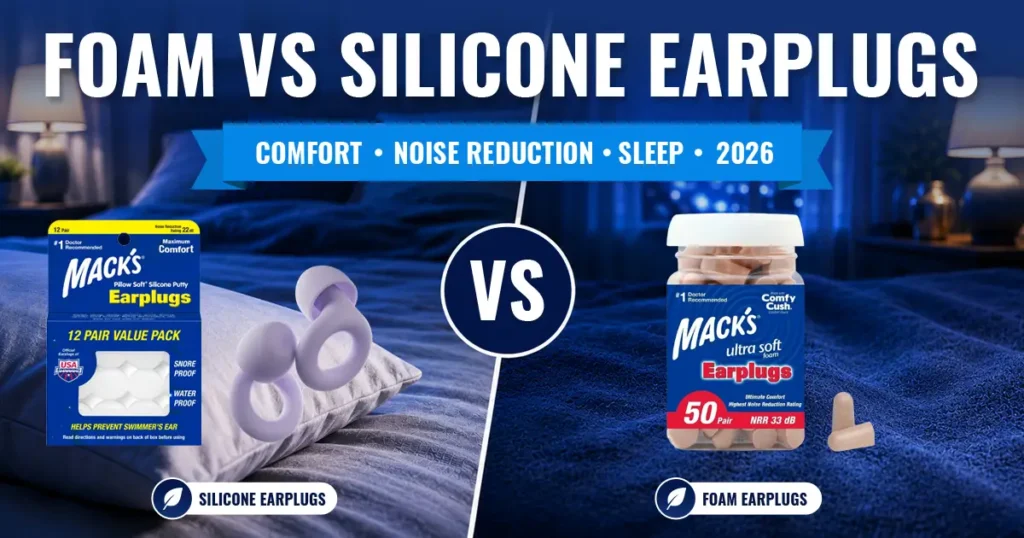
Foam vs silicone earplugs for sleeping: foam usually offers the strongest low-cost noise reduction when inserted correctly, while silicone may feel more comfortable for sleepers who dislike pressure inside the ear canal. Reusable silicone-tip earplugs offer a third option for people who value washable materials and replaceable tip sizes.
The right choice depends on your ear shape, sleeping position, sensitivity to pressure, required noise reduction and willingness to clean or replace the earplugs.
Quick verdict
- Choose foam for loud snoring, maximum published noise reduction and low upfront cost.
- Choose moldable silicone putty if you dislike objects extending deeply into your ear canal.
- Choose reusable silicone tips if you want a washable pair with multiple size options.
- For side sleeping: prioritize a low-profile design and comfortable seal rather than material alone.
Foam vs Silicone Earplugs for Sleeping at a Glance
| Feature | Foam Earplugs | Moldable Silicone Putty | Reusable Silicone Tips |
|---|---|---|---|
| How they fit | Expand inside the ear canal | Cover the ear opening | Seal inside the canal using sized tips |
| Noise reduction | Often the strongest when fitted correctly | Moderate to strong, depending on the seal | Varies by model, tip and fit |
| Side-sleeper comfort | Good when narrow and inserted correctly | Often comfortable because they do not protrude deeply | Best with a low-profile body |
| Reuse | Usually limited | Limited; follow the manufacturer’s instructions | Washable and reusable |
| Maintenance | Replace when dirty or damaged | Use with clean, dry hands and ears | Wash and dry according to instructions |
| Best for | Value and stronger sound reduction | People sensitive to deep canal pressure | Convenience and multiple tip sizes |
When comparing foam vs silicone earplugs for sleeping, comfort, fit, hygiene and sleeping position matter more than material alone.
First, “Silicone Earplugs” Can Mean Two Different Products
A fair foam vs silicone earplugs for sleeping comparison must separate moldable silicone putty from reusable silicone-tip earplugs. Although both contain silicone, they fit differently.
Moldable silicone putty is shaped over the ear opening. It should form an external seal rather than being pushed deeply into the ear canal. Mack’s Pillow Soft is a familiar example.
Reusable silicone-tip earplugs use preformed tips that sit inside the canal. Products such as Loop Quiet 2 normally include several sizes so users can find an appropriate seal.
This distinction matters because comfort, hygiene, reuse and pillow pressure can differ significantly between the two designs.
How Foam Earplugs Work
Foam earplugs are compressed into a narrow cylinder before insertion. They then slowly expand inside the ear canal, creating a seal that reduces the sound reaching the eardrum.
The seal is responsible for most of their performance. A highly rated foam plug that is only partly inserted may provide less real-world reduction than a lower-rated plug fitted correctly.
The CDC’s NIOSH guidance describes the roll-pull-hold method for inserting foam earplugs:
- Roll the entire plug into a narrow cylinder using clean hands.
- Reach over your head and gently pull the ear upward and backward.
- Insert the compressed plug and hold it while it expands.
- Check whether your voice and surrounding sounds become noticeably quieter.
If a large portion remains outside the ear, the plug may not be inserted adequately. However, an earplug should never be forced unusually deep or worn through persistent pain.
Advantages of Foam Earplugs
- Strong published noise-reduction ratings are widely available.
- They are inexpensive enough to replace regularly.
- Soft foam adapts to different canal shapes.
- Narrow or slim-fit versions are available for smaller ears.
- They can work well against loud, nearby snoring when fitted properly.
Disadvantages of Foam Earplugs
- Expanding foam may create uncomfortable pressure.
- Wide models can be painful in small ear canals.
- Incorrect insertion significantly reduces effectiveness.
- They collect dirt, moisture and skin oils with repeated handling.
- Most disposable foam plugs are not intended for indefinite reuse.
If standard foam plugs feel too large, compare narrower options in our guide to the best earplugs for small ear canals.
👉 Check Mack’s Ultra Soft Foam on Amazon
How Moldable Silicone Putty Earplugs Work
Moldable silicone putty creates a seal over the opening of the ear rather than expanding deep inside the canal. This can make it attractive to people who experience pressure from traditional plugs.
Follow the manufacturer’s directions carefully. With products such as Mack’s Pillow Soft, the whole plug is shaped into a ball and flattened over a clean, dry ear opening. It should not be divided into smaller pieces or pushed down the canal.
Advantages of Moldable Silicone
- Less material needs to sit deeply inside the ear canal.
- The putty can conform to the outer ear opening.
- It may feel comfortable for side sleepers when flattened correctly.
- It can be useful for irregular ear-opening shapes.
Disadvantages of Moldable Silicone
- A poor external seal can reduce performance.
- Hair, skin oil or moisture may prevent it from adhering properly.
- The material must be replaced when dirty or no longer tacky.
- Incorrectly pushing putty into the canal can create a safety problem.
👉 Check Mack’s Pillow Soft Silicone Putty on Amazon
How Reusable Silicone-Tip Earplugs Work
Reusable silicone earplugs typically use several interchangeable tip sizes. The tip seals inside the canal while an outer body or loop helps with insertion and removal.
The biggest advantage is repeatability. Once you find a comfortable tip, you can wash and reuse the earplugs according to the manufacturer’s instructions. However, reusable does not mean maintenance-free.
Clean the tips, allow them to dry fully and inspect them for cracks, deformation or buildup. A reusable earplug that no longer seals properly should be replaced.
Advantages of Reusable Silicone Tips
- Multiple tip sizes can improve fit.
- Washable construction can reduce ongoing waste.
- Low-profile designs are available for side sleepers.
- They are convenient for sleep, travel and concentration.
Disadvantages of Reusable Silicone Tips
- They cost more initially than disposable foam.
- The outer body may press against the pillow.
- A tip that is too large can create canal pressure.
- A tip that is too small may leak sound or fall out.
For a detailed comparison of two sleep-focused reusable designs, read Loop Dream vs Loop Quiet 2.
👉 Check Loop Quiet 2 on Amazon
Which Material Is Better for Side Sleepers?
Neither material automatically wins. The best side-sleeper earplug is the one that remains sealed without being pushed painfully inward by the pillow.
Narrow foam can work well when inserted correctly. Moldable silicone putty may be comfortable because it sits over the opening. Reusable silicone can also work, provided its outer body remains sufficiently low-profile.
Before judging an earplug, test it while lying on your usual pillow. An earplug that feels comfortable while sitting upright may behave differently when the outer ear is compressed.
Which Provides Better Noise Reduction?
Foam commonly has the advantage when maximum published attenuation is the priority. However, laboratory ratings assume an appropriate fit, and individual results vary considerably.
NIOSH emphasizes that hearing-protection performance depends on the individual fit and recommends offering different sizes and styles. A secure, comfortable seal is therefore more useful than choosing solely by the largest number printed on the package.
Also avoid comparing NRR and SNR numbers as though they are the same measurement. They come from different rating systems. Compare products using the same standard and remember that neither rating guarantees identical performance in every ear.
For snoring specifically, see our complete comparison of the best earplugs for snoring partners.
Hygiene and Reuse
Cleanliness matters regardless of material. Earplugs can trap moisture, collect debris and irritate the skin when they are dirty, damaged or used against already inflamed tissue.
- Wash and dry your hands before handling any earplug.
- Do not share earplugs with another person.
- Replace disposable foam when it becomes dirty, damaged or permanently compressed.
- Clean reusable tips according to the manufacturer’s instructions.
- Allow washable components to dry completely before wearing them again.
- Store clean earplugs in a ventilated case away from heat and dirt.
Read our safety guide, Is It Safe to Sleep With Earplugs Every Night?, before making nightly use part of your routine.
What If Either Type Hurts?
Earplug pain is not something you should simply tolerate. Pressure may indicate that the plug is too large, inserted too deeply or being pushed inward by the pillow.
Stop using the earplug if you develop persistent pain, burning, itching, discharge, swelling or a noticeable change in hearing. The NHS notes that irritation of the ear canal, including irritation associated with wearing earplugs, can contribute to outer-ear problems.
If discomfort continues after changing size or technique, consult a qualified healthcare professional rather than repeatedly testing products in an irritated ear.
Our guide to why earplugs hurt your ears explains the common causes and practical adjustments in more detail.
Foam vs Silicone Earplugs for Sleeping: Which Should You Choose?
Choose foam if:
- You need stronger noise reduction for loud snoring.
- You want a low-cost product that can be replaced frequently.
- You are comfortable inserting plugs correctly inside the canal.
- You can find a foam diameter appropriate for your ears.
Choose moldable silicone putty if:
- You dislike pressure from expanding foam.
- You prefer a product that covers the ear opening.
- You will carefully follow the shaping and removal instructions.
Choose reusable silicone tips if:
- You want washable earplugs for repeated use.
- You need several tip sizes to find a better fit.
- You prefer a low-profile reusable design for sleep and travel.
If no earplug feels comfortable, background sound may be a better option. Compare the two approaches in White Noise vs Earplugs for Snoring.
Final Verdict
In the foam vs silicone earplugs for sleeping debate, foam is generally the better choice for maximum affordable noise reduction, while silicone is often the better choice for reusable convenience or reduced deep-canal pressure.
Side sleepers should focus on size and profile. A narrow foam plug, correctly shaped silicone putty or low-profile reusable tip can all work. The winning design is the one that maintains a comfortable seal throughout the night without pain or irritation.
Frequently Asked Questions
Are silicone earplugs safer than foam for sleeping?
Neither material is automatically safer. Correct sizing, clean handling, proper insertion and stopping when pain or irritation develops are more important than material alone.
Can foam earplugs be reused?
Some foam products permit limited reuse when they remain clean and recover their shape, while others are intended for single or short-term use. Follow the manufacturer’s instructions and replace them when dirty, damaged or permanently compressed.
Can you sleep on your side with silicone earplugs?
Yes, but comfort depends on the design. Moldable putty should be flattened properly over the opening, while reusable silicone models should have a low-profile body that does not press painfully against the pillow.
Why do foam earplugs hurt my ears?
The plug may be too wide, inserted too deeply or pushed inward by the pillow. Try a smaller or lower-pressure model and stop using it if discomfort persists.
Which type is better for loud snoring?
Correctly fitted foam frequently provides the strongest first option for loud, nearby snoring. Real-world performance still depends on insertion technique and the shape of the wearer’s ear canal.