
Disclosure: This article contains affiliate links. If you buy through one of these links, Beglance may earn a commission at no extra cost to you. Product specifications can change.
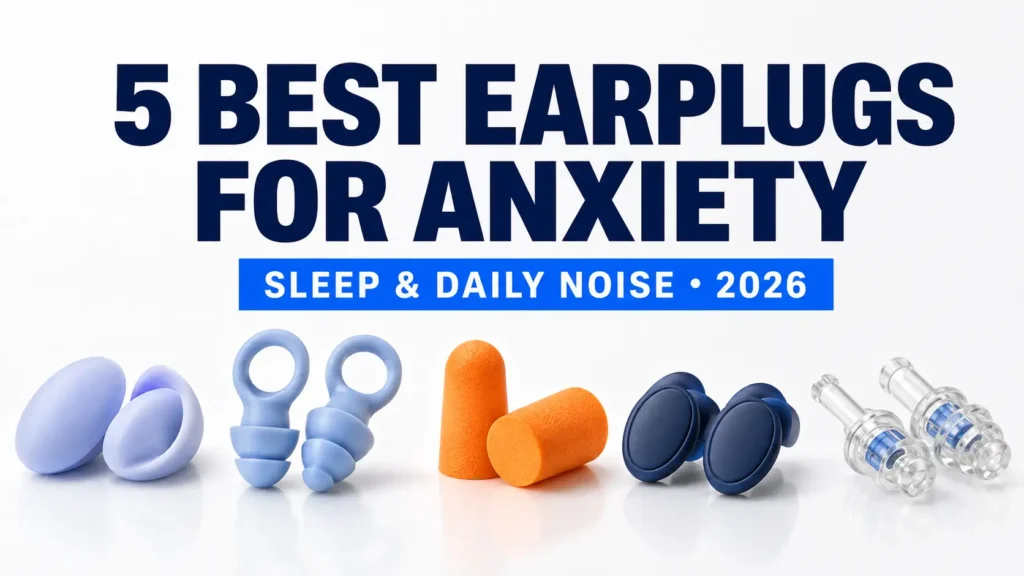
The best earplugs for anxiety depend on when noise bothers you. For side-sleeping and nighttime noise, Loop Dream is the most sleep-focused option. For reusable value, consider Loop Quiet 2. For stronger foam-based blocking, Mack’s Ultra Soft is the budget choice. Alpine SleepDeep suits people who want a soft oval design, while Loop Engage 2 is better for daytime situations where you still need to hear conversations.
If nighttime snoring is the main sound disturbing your sleep, see our guide to the best earplugs for snoring partners.
Earplugs do not treat anxiety. However, if traffic, footsteps, snoring or unpredictable background noise keeps your nervous system alert, reducing that sound may make your environment feel calmer and more manageable.
Quick recommendation:
- Best for sleep and side sleepers: Loop Dream
- Best reusable value: Loop Quiet 2
- Best foam option for stronger blocking: Mack’s Ultra Soft
- Best oval-shaped sleep option: Alpine SleepDeep
- Best for daytime conversations: Loop Engage 2
Best Earplugs for Anxiety Compared
| Earplugs | Best for | Published noise rating | Reusable? |
|---|---|---|---|
| Loop Dream | Sleep and side sleepers | 27 dB SNR | Yes |
| Loop Quiet 2 | Reusable value, sleep and travel | 24 dB SNR / 14 dB NRR | Yes |
| Mack’s Ultra Soft | Strong foam-based reduction | 33 dB NRR | No |
| Alpine SleepDeep | Oval fit and side sleeping | Frequency-specific attenuation table | Yes |
| Loop Engage 2 | Daytime noise and conversations | 16 dB SNR | Yes |
Important: SNR and NRR are different laboratory rating systems and should not be compared as if they were identical. Your real-world reduction also depends heavily on fit and insertion.
How We Chose These Earplugs
This guide is based on current manufacturer specifications, intended use, material, shape, sizing options and published noise ratings. We did not perform laboratory noise testing, so we do not claim that one product blocks a precise amount of sound in every person’s ears.
We prioritized five practical factors: comfort for extended wear, low-profile construction, multiple size options, ease of cleaning and whether the design matches the situation—sleep, strong blocking or daytime conversation.
1. Best for Sleep and Side Sleepers: Loop Dream
Best for: People who mainly want relief from nighttime sounds and need a softer, low-pressure shape for side sleeping.
Loop Dream is the most sleep-specific choice in this list. Its oval foam-and-silicone tips follow the shape of the ear, while the soft body is designed to reduce pressure when your ear rests against a pillow. Loop publishes a 27 dB SNR rating and includes multiple tip sizes.
Why choose it: The entire design is intended for sleeping rather than commuting, concerts or general-purpose use.
Reasons to skip it: It costs more than simple foam plugs, and no earplug can guarantee complete silence. Very loud snoring, alarms or sirens may still be audible at a reduced level.
👉 View Loop Dream on the official website
2. Best Reusable Value: Loop Quiet 2
Best for: Sleep, travel, focus and people who want washable silicone instead of disposable foam.
Loop Quiet 2 uses flexible silicone and comes with four ear-tip sizes. The manufacturer publishes ratings of up to 24 dB SNR and 14 dB NRR. It is reusable, easy to clean and less expensive than Loop Dream.
Why choose it: It is a versatile option if you want one pair for bedtime, travel and quiet focus.
Reasons to skip it: It is not as sleep-specific as Loop Dream, and it may provide less reduction than a correctly fitted high-NRR foam plug.
👉 Check Loop Quiet 2 on Amazon
3. Best Foam Earplugs for Stronger Blocking: Mack’s Ultra Soft
Best for: Louder bedrooms, snoring, traffic and buyers who want strong reduction at a low cost.
Mack’s Ultra Soft earplugs use low-pressure polyurethane foam and carry a published 33 dB NRR. Foam can create a strong seal when rolled and inserted correctly, making this a practical choice when reusable silicone does not reduce enough sound.
Why choose it: The price per pair is low, and the published NRR is higher than the other products in this comparison.
Reasons to skip it: Foam can feel uncomfortable in small or sensitive ear canals. It must be inserted with clean hands and replaced when dirty or waxy. The manufacturer’s laboratory rating does not guarantee that every wearer receives 33 dB of real-world reduction.
👉 Check Mack’s Ultra Soft on Amazon
4. Best Oval Sleep Design: Alpine SleepDeep
Best for: Side sleepers who dislike round ear tips and want reusable, washable plugs in multiple sizes.
Alpine SleepDeep uses an oval shape intended to follow the natural curve of the ear canal. The manufacturer offers small, medium and large options and publishes frequency-by-frequency attenuation data rather than presenting one directly comparable U.S. NRR on the product page.
Why choose it: The oval profile and soft material may suit people who feel pressure from round plugs while lying on a pillow.
Reasons to skip it: Fit remains personal, and the published attenuation information is not as simple to compare with a U.S. NRR number.
👉 View Alpine SleepDeep on the official website
5. Best for Daytime Noise and Conversations: Loop Engage 2
Best for: Restaurants, offices, parenting, commuting and social situations where background noise feels overwhelming but you still need to follow speech.
Loop Engage 2 is not our first choice for sleeping. It is included because many people searching for noise-reducing earplugs for anxiety need help during the day, not only at bedtime. Its acoustic design reduces background noise while aiming to preserve conversation clarity and minimize the blocked-ear sensation. Loop publishes a 16 dB SNR rating.
Why choose it: It offers lighter reduction for situations where awareness and communication matter.
Reasons to skip it: Choose a sleep-specific or stronger-blocking option if your main problem is snoring or loud nighttime traffic.
👉 View Loop Engage 2 on the official website
Which Type Should You Choose?
- If pillow pressure hurts: Start with Loop Dream or Alpine SleepDeep.
- If you want reusable and affordable: Choose Loop Quiet 2.
- If you want stronger blocking on a budget: Try Mack’s Ultra Soft.
- If you need to hear people clearly: Choose Loop Engage 2.
- If having blocked ears makes you more anxious: Consider a white noise machine instead of deeper sound blocking.
Do Earplugs Actually Help Anxiety?
Earplugs are not an anxiety treatment. They may help indirectly when noise is one of your triggers. Reducing sudden changes—such as doors, footsteps, traffic or a partner’s snoring—can make the environment feel more predictable and reduce the amount of sound demanding your attention.
If your anxiety continues in quiet rooms or affects your daily life, earplugs are unlikely to address the underlying cause. Consider speaking with a qualified mental-health professional. For bedtime support beyond sound control, use this 10-minute routine for nighttime anxiety.
NRR vs SNR: Why the Numbers Look Different
NRR is commonly used in the United States, while SNR is common in Europe. They come from different testing systems, so a 27 dB SNR product should not automatically be treated as stronger or weaker than a product with a 24 dB NRR.
Ratings are measured under controlled conditions. The CDC notes that the protection a person actually receives can be lower and depends heavily on correct fit. For anxiety and ordinary nighttime noise, choose enough reduction for comfort without unnecessarily isolating yourself from alarms, children or emergencies.
How to Wear Foam Earplugs Correctly
For foam earplugs, follow the CDC’s simple roll, pull and hold method:
- Roll: With clean hands, roll the foam into a narrow, crease-free cylinder.
- Pull: Reach over your head and gently pull the top of your ear up and back.
- Hold: Insert the compressed plug and hold it in place while it expands.
Do not force an earplug deeper when it hurts. Poor sizing or pillow pressure can cause soreness, especially for side sleepers.
Safety and Hygiene Before Sleeping in Earplugs
- Wash your hands before inserting foam or reusable earplugs.
- Clean reusable models according to the manufacturer’s instructions.
- Replace foam plugs when they become dirty, damaged or waxy.
- Confirm that you can still hear any alarm, child or emergency sound you must respond to.
- Stop using them if you develop pain, discharge, bleeding, dizziness or a sudden hearing change.
- Ask a healthcare professional before continued use if you have an ear infection, perforated eardrum, recent ear surgery or recurring wax blockage.
If wearing anything inside your ears feels uncomfortable, compare the alternatives in our white noise machine guide.
Frequently Asked Questions
What are the best earplugs for anxiety?
The best choice depends on the situation. Loop Dream is designed for sleep and side sleepers; Mack’s Ultra Soft offers stronger foam-based reduction; and Loop Engage 2 is designed for daytime situations where conversation still matters.
Can earplugs reduce anxiety?
They may reduce a noise-related trigger, but they do not treat anxiety itself. They are most useful when unpredictable or excessive sound is what keeps you alert or overwhelmed.
Can I still hear an alarm while wearing earplugs?
Possibly, but it depends on the alarm volume, distance, earplug fit and your hearing. Test the alarm before sleeping and do not rely on an earplug setup that prevents you from hearing important safety signals.
Why do earplugs hurt when I sleep?
The plug may be too large, inserted too deeply or pressed inward by your pillow. Try a smaller tip, a low-profile sleep design or an external white noise machine.
Is a higher noise rating always better?
No. Fit and comfort affect real-world performance, and too much reduction may isolate you from important sounds. Also, NRR and SNR are different rating systems and should not be compared directly.
If you plan to wear earplugs regularly, read our guide on whether it is safe to sleep with earplugs every night, including cleaning, correct insertion and warning signs.
Conclusion
For most side sleepers, Loop Dream is the most purpose-built option. Choose Loop Quiet 2 for reusable value, Mack’s Ultra Soft for stronger foam-based blocking, Alpine SleepDeep for an oval sleep fit, or Loop Engage 2 for daytime noise sensitivity.
The right earplugs for anxiety should reduce the sound that bothers you without creating pain, pressure or unsafe isolation. Start with the use case and fit—not simply the largest number printed on the package.
Primary Sources
- Loop Dream product specifications
- Loop Quiet 2 product specifications
- Mack’s Ultra Soft specifications and instructions
- Alpine SleepDeep specifications
- Loop Engage 2 product specifications
- CDC/NIOSH hearing-protection selection and fit guidance
- Cleveland Clinic: nighttime in-ear device risks and safety
This article is for general wellness and educational purposes and is not medical advice. Earplugs are not a treatment for an anxiety disorder or sleep disorder.

Pingback: Best White Noise Machines for Anxiety (Beginner Guide 2026)