Disclosure: This article contains links to product guides that may include affiliate links. If you purchase through one of those links, Beglance may earn a commission at no additional cost to you.
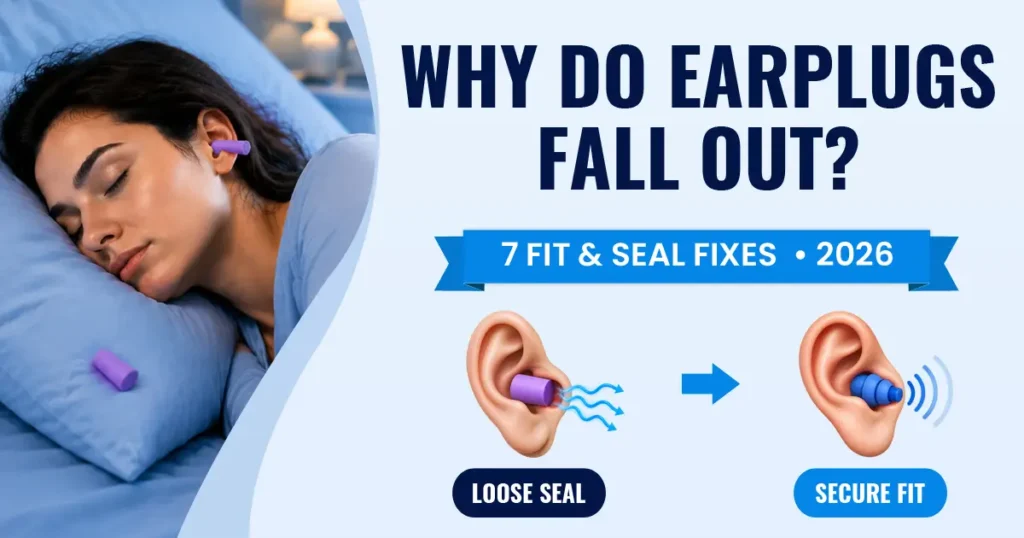
Why do earplugs fall out while sleeping? The most common reasons are an incorrect size, a weak seal, incomplete foam expansion, pillow pressure, overnight movement, moisture or an earplug design that does not suit your ear shape. A secure earplug should remain comfortable and stable without being pushed unusually deep into the ear canal.
If your earplugs repeatedly become loose, work through the causes below one at a time. Changing the fit is usually more effective than simply inserting the same earplug more deeply.
Quick fixes:
- Try the next available tip size.
- Test each ear separately because your ears may need different sizes.
- Use the roll-pull-hold method with foam earplugs.
- Hold foam plugs in place while they expand.
- Keep reusable tips clean and completely dry.
- Choose a low-profile design if your pillow pushes the earplug outward.
- Replace worn, cracked or permanently compressed earplugs.
Why Do Earplugs Fall Out While Sleeping?
An earplug stays in place by creating a gentle seal against the ear canal. It can work loose when the plug is too small, has not expanded completely or is disturbed by your pillow and head movement.
The objective is not to force the earplug farther inward. Instead, select a suitable size and create an even seal according to the manufacturer’s insertion directions. A painful earplug is not a correctly fitted earplug.
1. The Earplug Is Too Small
An undersized earplug may initially feel comfortable but fail to maintain contact with the ear canal. Small movements of your jaw, head or pillow can then gradually loosen it.
Signs that the earplug may be too small include:
- It slides into place without much resistance.
- Noise reduction changes whenever you move your head.
- The earplug gradually moves outward during the night.
- You need to insert it unusually deep to create a seal.
Fix: Test the next larger tip or size, provided it remains comfortable. Do not assume that both ears need the same size. Your left and right ear canals may fit differently.
If standard products consistently feel loose or oversized, compare the options in our guide to the best earplugs for small ear canals.
2. Foam Earplugs Have Not Expanded Properly
Foam earplugs must be compressed before insertion and then held in position while the foam expands. If the plug is inserted while still wide, folded unevenly or released too quickly, it may create only a partial seal.
The CDC/NIOSH foam-earplug instructions recommend rolling the plug into a thin cylinder, pulling the ear upward and backward, inserting the compressed plug and holding it while it expands.
Fix: Use clean hands and follow this sequence:
- Roll the entire foam plug into a narrow, crease-free cylinder.
- Reach over your head with the opposite hand.
- Pull the outer ear gently upward and backward.
- Insert the compressed plug without forcing it.
- Hold it in position for approximately 20 to 30 seconds while it expands.
If a large portion of the foam remains visibly outside the ear, the plug may not have been compressed or inserted correctly. Always follow the specific product instructions because earplug shapes vary.
3. The Reusable Tip Is Not Creating a Seal
Reusable silicone earplugs usually include several tip sizes. The correct tip should create a stable seal without causing persistent pressure, burning or soreness.
A tip that is too small may slip. A tip that is too large can be pushed outward by the canal or become uncomfortable during side sleeping.
If standard earplugs feel too large or create uncomfortable pressure, compare our picks for the best earplugs for small ear canals.
Fix: Test one size at a time in each ear. After inserting it, turn your head gently and open and close your jaw. If the seal repeatedly breaks, try another tip.
Do not choose the largest tip solely because it appears to block more noise. Comfort and a consistent seal matter more than maximum size.
4. Your Pillow Pushes the Earplug Outward
Side sleepers place additional pressure on the outer ear. If part of an earplug protrudes, the pillow can press it inward at one angle and then push it outward as the sleeper moves.
This may explain why an earplug stays secure while you are awake but appears on the pillow in the morning.
Fix: Choose a soft, low-profile design with minimal material extending beyond the outer ear. A softer pillow or a pillow with an ear cutout may also reduce direct pressure.
For an example of two low-profile reusable designs, see our Loop Dream vs Loop Quiet 2 comparison.
5. Moisture, Skin Oil or Product Residue Reduces Grip
Reusable tips may become slippery when covered with moisture, skin oil, hair products or cleaning residue. A damp earplug can also trap moisture in the ear canal.
Fix: Clean reusable earplugs only as directed by their manufacturer and allow them to dry completely before use. Wash and dry your hands before handling them.
Avoid inserting cotton swabs or other objects into the ear to prepare it for an earplug. Guidance from the NHS advises against placing objects inside the ear or attempting to remove earwax yourself.
6. The Earplug Is Worn or Damaged
Foam and reusable earplugs gradually lose their original shape and elasticity. A foam plug that no longer expands evenly cannot maintain a reliable seal. Reusable tips may also stretch, tear, harden or become permanently deformed.
OSHA guidance on hearing protectors notes that worn plugs can lose elasticity and provide less protection.
Fix: Replace an earplug when:
- Foam no longer returns to its original shape.
- The material remains permanently compressed.
- A reusable tip has cracks, tears or stretched edges.
- The surface becomes sticky, hard or difficult to clean.
- The plug no longer seals despite correct insertion.
Follow the manufacturer’s replacement and cleaning directions rather than relying on appearance alone.
7. The Design Does Not Match Your Ear Shape
Ear canals differ in width, angle and shape. A product that stays secure for one sleeper may repeatedly loosen for another even when both people use the correct insertion technique.
Foam plugs adapt as they expand, while reusable silicone products rely more heavily on the selected tip shape. Some sleepers prefer oval tips or low-profile sleep designs. Others achieve a more dependable seal with slim foam.
Fix: Change one variable at a time—size, material or shape—so you can identify what improves the fit. If several standard products fail to seal, professionally fitted custom earplugs may be worth discussing with a qualified hearing professional.
How to Check Whether an Earplug Fits Correctly
After insertion, cup both hands over your ears and then move them away. If surrounding sound becomes substantially quieter only while your hands cover your ears, the plugs may not have formed a complete seal.
A suitable fit should:
- Remain stable when you turn your head.
- Reduce sound consistently.
- Feel secure without sharp pressure.
- Remain comfortable when your head touches the pillow.
- Be removable without sudden or severe pain.
If an earplug seals properly but causes pain, do not continue wearing it solely to stop it from falling out. Read our guide explaining why earplugs hurt your ears and how to address the underlying fit problem.
Earplug Fit Problems at a Glance
| What You Notice | Likely Cause | First Fix to Try |
|---|---|---|
| Plug slowly slides outward | Tip may be too small | Test the next size |
| Foam loosens soon after insertion | Incomplete expansion or poor technique | Use roll-pull-hold |
| Plug comes out only during side sleeping | Pillow pressure | Try a low-profile design |
| Reusable tip becomes slippery | Moisture, oil or residue | Clean and dry it completely |
| One earplug stays in but the other falls out | Different canal sizes or shapes | Use different sizes in each ear |
| Old foam no longer seals | Material has lost elasticity | Replace the earplug |
Should You Insert Earplugs More Deeply?
No. An earplug should be inserted only according to its instructions. Forcing it unusually deep can increase pressure, make removal difficult or irritate the ear canal.
Use a correctly sized product and proper technique instead. If a plug cannot maintain a seal without deep insertion, change the size or design.
When Should You Stop Wearing Earplugs?
Stop using the affected earplug if you experience significant pain, increasing soreness, itching, discharge, swelling, bleeding, dizziness or a noticeable change in hearing.
Seek medical guidance if symptoms persist, if part of an earplug becomes stuck or if you suspect an infection. Do not try to remove a deeply stuck object using another object.
For broader guidance on hygiene, earwax and warning symptoms, read is it safe to sleep with earplugs every night?
What If No Earplugs Stay in Place?
If repeated sizing and insertion adjustments do not work, an external sound-masking option may be more comfortable. White noise does not block sound at the ear; it adds a steady background sound that can make sudden changes less noticeable.
Compare the advantages and limitations in our guide to white noise vs earplugs for snoring. Some sleepers use low-volume background sound alone, while others combine it with comfortable earplugs.
People with small or sensitive ears may need narrower foam plugs or smaller reusable tips. See our guide to the best earplugs for small ear canals.
Conclusion
Why do earplugs fall out while sleeping? In most cases, the problem is caused by size, insertion technique, pillow pressure, moisture, worn material or a design that does not match the ear.
Begin by checking the size and seal. If you use foam, apply the roll-pull-hold technique and allow the plug to expand fully. For side sleeping, consider a lower-profile design that is less likely to be disturbed by the pillow.
Never solve a loose fit by forcing an earplug deeper. A secure earplug should remain comfortable. Stop using it and seek appropriate medical advice if you develop pain, discharge, swelling or hearing changes.
Frequently Asked Questions
Why does only one earplug fall out?
Your ear canals may have different sizes or angles. Try fitting each ear separately instead of automatically using the same tip size on both sides.
Why do foam earplugs fall out overnight?
They may not have been rolled narrowly enough, inserted while compressed or held in place during expansion. Old foam that has lost elasticity can also loosen.
Can a pillow push an earplug out?
Yes. Direct pressure and head movement can disturb earplugs that protrude from the outer ear. A low-profile design or softer pillow may help.
Should I use a larger earplug?
Try the next size only if it remains comfortable. An oversized plug may create excessive pressure and can also work outward. Choose the smallest size that forms a secure, comfortable seal.