Disclosure: This article contains affiliate links. If you purchase through one of these links, Beglance may earn a commission at no additional cost to you. Product specifications, availability and prices can change.
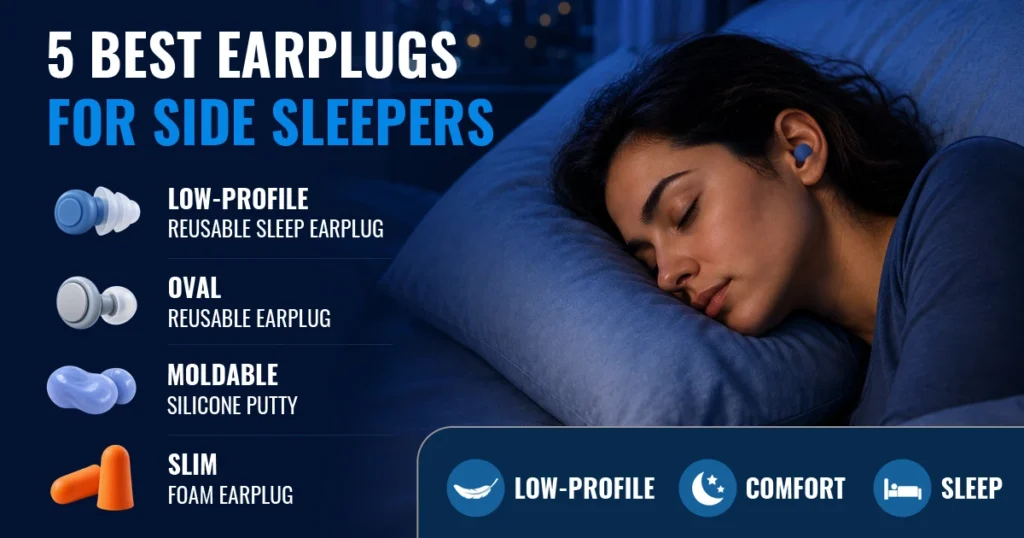
The best earplugs for side sleepers combine a low-profile shape with a comfortable seal that does not become painful when the ear presses against a pillow. Loop Dream is our best overall choice because it is specifically designed for sleep and side sleeping. Alpine SleepDeep is a strong oval alternative, while Mack’s Pillow Soft provides a moldable option that covers the ear opening instead of placing a rigid body inside the canal.
Side-sleeper comfort depends on more than the material. Ear-canal size, pillow firmness, insertion depth and the amount of the earplug protruding from the outer ear can all affect whether a pair remains comfortable overnight.
Quick recommendations
- Best overall: Loop Dream
- Best oval reusable design: Alpine SleepDeep
- Best moldable silicone putty: Mack’s Pillow Soft
- Best slim foam option: Mack’s Slim Fit
- Best reusable value: Loop Quiet 2
Best Earplugs for Side Sleepers Compared
| Product | Type | Published Rating | Best For | Main Trade-Off |
|---|---|---|---|---|
| Loop Dream | Reusable sleep earplug | 27 dB SNR | Dedicated side-sleeper comfort | Premium price |
| Alpine SleepDeep | Reusable oval earplug | 27 dB SNR | People who prefer an oval fit | Correct size must be selected |
| Mack’s Pillow Soft | Moldable silicone putty | 22 dB NRR | Avoiding a rigid in-canal body | Requires careful shaping |
| Mack’s Slim Fit | Disposable foam | 31 dB NRR | Small or sensitive ear canals | Requires correct insertion |
| Loop Quiet 2 | Reusable silicone | 24 dB SNR | Reusable value and versatility | Less sleep-specific than Dream |
Ratings are published by the manufacturers. SNR and NRR use different testing systems and should not be compared as if they were identical. Real-world reduction depends heavily on sizing, insertion and the seal achieved in your ears.
How We Selected These Earplugs
We reviewed manufacturer-published materials, shapes, noise-reduction ratings, available sizes, intended uses and care instructions. We prioritized products with low-profile, soft, oval or moldable designs that may reduce pressure when the outer ear rests against a pillow.
Beglance did not perform independent laboratory noise testing. Published attenuation numbers are therefore presented as manufacturer specifications rather than guaranteed results for every wearer.
We evaluated each product using five side-sleeper considerations:
- How far the earplug extends beyond the outer ear.
- Whether the pillow can push the plug farther into the canal.
- Available sizes and ability to create a comfortable seal.
- Material softness and overnight maintenance requirements.
- Published noise reduction using the appropriate rating system.
1. Loop Dream: Best Overall Earplugs for Side Sleepers
Best for: People who primarily need reusable earplugs for overnight use and regularly sleep on their side.
Loop Dream is the most purpose-built side-sleeper option in this comparison. Loop describes it as a sleep-specific earplug with a low-profile body made from its softest silicone. Its oval foam-silicone tips are designed to follow the natural shape of the ear, while the outer body is intended to reduce pressure against the pillow.
Loop publishes a noise-reduction rating of 27 dB SNR. The current design includes four tip sizes and two tip styles for additional fit customization. A secure fit is especially important for people who change positions or move frequently during sleep.
Why choose it:
- Designed specifically for sleep and side sleeping.
- Soft, low-profile outer body.
- Oval tips designed to follow the shape of the ear.
- Four sizes for adjusting the seal.
- Reusable construction.
Reasons to skip it: It normally costs more than foam or moldable putty. Its 27 dB SNR is a laboratory rating, not a promise of complete silence. The specialized tips also require appropriate cleaning and eventual replacement.
Review the official Loop Dream specifications.
2. Alpine SleepDeep: Best Oval Reusable Option
Best for: Side sleepers who dislike conventional round tips and want a soft reusable earplug available in several sizes.
Alpine SleepDeep uses a soft oval shape intended to follow the natural curve of the ear canal. The design minimizes the amount of rigid material pressing against the outer ear, making it one of the most relevant alternatives to Loop Dream.
Alpine publishes a 27 dB SNR rating and offers SleepDeep in small, medium and large sizes. Selecting the correct size matters because an oversized model may create pressure, while an undersized model may leak sound or loosen during the night.
Why choose it:
- Oval profile created for overnight use.
- Soft material suitable for lying against a pillow.
- Three stated size options.
- Reusable and washable according to the manufacturer’s instructions.
- Strong published SNR within this comparison.
Reasons to skip it: An oval tip may feel unfamiliar if you normally use tapered foam. Retailer packages and available sizes can differ, so confirm the exact size before ordering.
See the official Alpine SleepDeep specifications.
👉 Check Alpine SleepDeep on Amazon
3. Mack’s Pillow Soft: Best Moldable Silicone Putty
Best for: Side sleepers who dislike the pressure created by a preformed earplug body inside the canal.
Mack’s Pillow Soft is different from reusable silicone-tip earplugs. The moldable silicone putty is shaped over the ear opening to create an external seal. It should not be pushed into the ear canal.
This external fit can be useful for side sleepers because there is no rigid loop or stem extending from the ear. The putty can be flattened to match the outer ear opening, but comfort and noise reduction depend on creating an even seal.
Mack’s publishes a 22 dB NRR. The manufacturer instructs users to shape the whole plug into a ball, place it over the opening and flatten it without dividing or elongating the material.
Why choose it:
- No preformed body sitting deeply inside the canal.
- Moldable shape adapts to the ear opening.
- Flat profile may reduce direct pillow pressure.
- Affordable compared with premium reusable models.
Reasons to skip it: Hair, moisture or skin oil may weaken the seal. It must be replaced when dirty or no longer tacky. Never divide the plug or push silicone putty into the canal.
Read the official Mack’s Pillow Soft directions and warnings.
👉 Check Mack’s Pillow Soft on Amazon
4. Mack’s Slim Fit: Best Slim Foam Option
Best for: Side sleepers with small or sensitive ear canals who prefer disposable foam.
Standard foam earplugs can become uncomfortable when their diameter creates constant outward pressure. Mack’s Slim Fit uses a smaller-diameter, low-pressure foam profile intended for smaller or more sensitive ear canals.
Mack’s publishes a 31 dB NRR. Foam can adapt to differences between the left and right ear, but its performance depends strongly on correct insertion. The plug should be rolled into a narrow, crease-free cylinder and held in place while it expands.
Why choose it:
- Smaller diameter than standard foam models.
- Low-pressure foam intended for comfort.
- Strong published U.S. NRR.
- Lower upfront cost than reusable sleep earplugs.
Reasons to skip it: Foam requires more insertion practice and regular replacement. An incorrectly inserted plug may protrude, loosen or allow the pillow to push it inward. A slim model may also provide an inadequate seal for larger ear canals.
If conventional earplugs feel oversized, compare additional options in our guide to the best earplugs for small ear canals.
See the official Mack’s Slim Fit specifications.
👉 Check Mack’s Slim Fit on Amazon
5. Loop Quiet 2: Best Reusable Value
Best for: Buyers who want one washable pair for sleeping, travel and concentration.
Loop Quiet 2 is made from flexible soft-touch silicone and includes several tip sizes. Loop publishes up to 24 dB SNR of noise reduction. It is less specialized for overnight use than Loop Dream, but its flexible construction and lower price make it a practical starting point.
The supplied sizes allow users to adjust the fit rather than relying on a single universal tip. Side sleepers should test the earplug while lying on their usual pillow because the circular outer body may feel different depending on ear shape.
Why choose it:
- Washable and reusable silicone construction.
- Multiple tip sizes.
- Suitable for sleep, travel and focus.
- Usually less expensive than Loop Dream.
Reasons to skip it: Quiet 2 is not as specifically shaped for overnight side sleeping as Dream. If pillow pressure is your main complaint, the softer and more specialized Dream body may justify the additional cost.
Read our complete Loop Dream vs Loop Quiet 2 comparison for a closer look at their fit, noise ratings and value.
See the official Loop Quiet 2 specifications.
👉 Check Loop Quiet 2 on Amazon
Why Side Sleeping Makes Some Earplugs Hurt
An earplug may feel comfortable while sitting upright but become painful after the outer ear is compressed against a pillow. The pressure can push a protruding earplug deeper, press its outer body into the cartilage or increase expansion pressure inside the canal.
Common causes include:
- The earplug is too wide for the canal.
- The outer body extends too far beyond the ear.
- The pillow pushes the plug inward.
- The earplug was inserted too deeply.
- A reusable tip is too large.
- Dirty or damp material is irritating the skin.
If wearing earplugs causes soreness, read our guide explaining why earplugs hurt your ears before continuing nightly use.
How to Choose Earplugs for Side Sleeping
Prioritize a low-profile shape
The less material extending beyond the outer ear, the less leverage the pillow has to push the plug inward. A soft outer body, oval profile or properly flattened moldable plug may feel more comfortable than a rigid stem.
Choose the smallest size that seals comfortably
A larger tip does not automatically provide better protection. It should create a stable seal without sharp pressure, throbbing or burning. Your left and right ears may require different sizes.
Test the fit against your actual pillow
Wear the plugs while lying in your normal sleeping position before depending on them overnight. Turn your head gently and check whether either earplug moves, loosens or becomes painful.
Understand foam versus silicone
Foam expands inside the canal, moldable silicone covers the opening and reusable silicone tips use preformed sizes. Each design creates a different type of pillow pressure. Our foam vs silicone earplugs for sleeping comparison explains these differences in detail.
Do not select by rating alone
A correctly fitted lower-rated plug may reduce more sound in your ears than a higher-rated model with a poor seal. NRR and SNR are also different systems, so their numbers should not be directly ranked together.
How to Insert Foam Earplugs Correctly
The CDC’s NIOSH guidance recommends the roll-pull-hold method:
- With clean hands, roll the entire plug into a narrow cylinder.
- Reach over your head and pull the top of the ear upward and backward.
- Insert the compressed plug without forcing it unusually deep.
- Hold it in place while the foam expands and forms a seal.
Review the complete CDC/NIOSH foam-earplug instructions. If the plug repeatedly loosens overnight, see our guide to why earplugs fall out while sleeping.
Cleaning and Safety
Wash and dry your hands before handling any earplug. Replace disposable foam when it becomes dirty, damaged, hardened or permanently compressed. Wash reusable components only according to the manufacturer’s instructions and allow them to dry completely before wearing them again.
Do not share earplugs. Stop using them if you experience persistent pain, increasing irritation, discharge, swelling, bleeding, dizziness or a noticeable change in hearing. These symptoms should not be treated as an ordinary sizing problem.
The NIDCD recommends checking that hearing protectors fit comfortably and removing tightly sealed plugs slowly. Review its hearing-protector fitting guidance.
For routine hygiene, earwax and warning signs, read Is It Safe to Sleep With Earplugs Every Night?
Can Side Sleepers Still Hear an Alarm?
You may still hear an alarm while wearing earplugs, but this cannot be guaranteed. The result depends on the alarm volume, distance, frequency, your hearing and the seal created by the earplugs.
Test the alarm before relying on any earplugs overnight. Consider an additional vibration or light-based alarm if waking at a specific time is essential. Do not use a setup that prevents you from hearing required safety signals, a child or another person who depends on you.
Final Verdict
Loop Dream is our best overall choice among the best earplugs for side sleepers because its soft, low-profile body and oval tips are specifically designed around overnight comfort. Alpine SleepDeep is the strongest alternative for sleepers who prefer an oval reusable design.
Choose Mack’s Pillow Soft if you prefer moldable putty covering the ear opening, Mack’s Slim Fit if standard foam plugs feel too wide, or Loop Quiet 2 if reusable value and daytime versatility matter more than a sleep-specific shape.
The best option is ultimately the one that maintains a secure seal without becoming painful when your ear presses against the pillow. If snoring is the main noise problem, compare our complete list of the best earplugs for snoring partners.
Frequently Asked Questions
What are the best earplugs for side sleepers?
Loop Dream is our best overall choice because it was designed specifically for sleep and has a soft, low-profile body. Alpine SleepDeep is a strong oval reusable alternative.
Why do earplugs hurt when I sleep on my side?
The pillow may push the plug deeper or press its outer body against the ear. An oversized tip, excessive insertion depth or a protruding design can increase discomfort.
Are foam or silicone earplugs better for side sleepers?
Neither material is universally better. Slim foam can work when inserted correctly, moldable silicone can create a flat external seal, and low-profile reusable silicone can reduce pillow pressure.
Can side sleepers use Loop Quiet 2?
Yes. Loop Quiet 2 is flexible and suitable for sleep, but Loop Dream is more specifically designed for overnight use and side-sleeper comfort.
Can earplugs completely block snoring?
No earplug guarantees complete silence. Correctly fitted plugs can reduce snoring, but louder sounds may remain audible at a lower level.
Should I use the same earplug size in both ears?
Not necessarily. Ear canals can differ in size and angle, so you may obtain a more comfortable seal by fitting each ear separately.