Disclosure: This article contains links to product guides that may include affiliate links. If you buy through one of those links, Beglance may earn a commission at no extra cost to you.
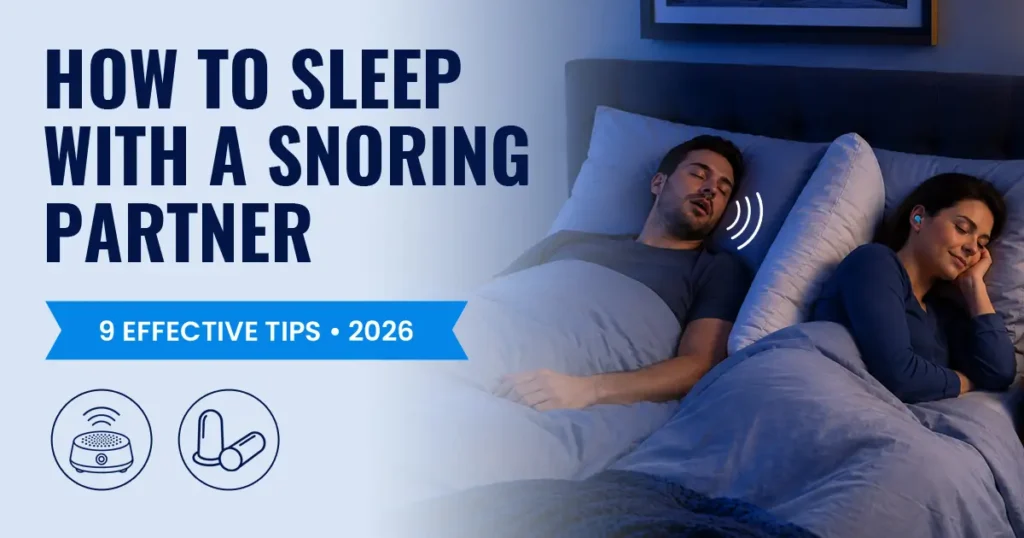
If you are wondering how to sleep with a snoring partner, begin with three practical changes: use comfortable earplugs, add steady background sound and ask your partner to try sleeping on their side. These steps can make ordinary snoring less disruptive without turning bedtime into an argument.
However, loud snoring accompanied by gasping, choking, breathing pauses or serious daytime sleepiness should not simply be covered with more noise. These can be symptoms of sleep apnea and should be discussed with a healthcare professional.
This guide explains how to sleep with a snoring partner while protecting your own rest, supporting your relationship and recognizing when snoring needs medical attention.
Important medical note: This article provides general educational information and is not a diagnosis or substitute for professional medical care. Snoring is sometimes harmless, but it can also occur with obstructive sleep apnea.
How to Sleep With a Snoring Partner Tonight: Quick Answer
If you need a workable plan tonight, try these steps in order:
- Ask your partner to start the night on their side.
- Use properly fitted, comfortable earplugs.
- Add a fan or white-noise machine at a moderate volume.
- Keep the bedroom dark, cool and otherwise quiet.
- Use a separate sleeping space when you urgently need uninterrupted rest.
- Watch for breathing pauses, gasping or excessive daytime sleepiness.
The objective is not to create complete silence. It is to reduce the sudden sound changes that repeatedly pull you out of sleep.
A practical plan for how to sleep with a snoring partner should reduce tonight’s disruption while also addressing the cause of repeated snoring.
1. Discuss the Snoring During the Day
Do not begin the conversation while both of you are frustrated at 2 a.m. Choose a calm time during the day and describe what is happening without blaming your partner.
Instead of saying, “You keep ruining my sleep,” try something more specific:
Conversation example: “I have been waking up several times because of the snoring, and I am struggling the next day. Can we try a few changes together tonight?”
Remember that a person normally cannot hear or control their own snoring while asleep. Treating it as a shared sleep problem usually produces a better result than treating it as bad behavior.
You can also keep a simple seven-night record of:
- When the snoring is most noticeable
- Whether your partner is sleeping on their back or side
- Whether alcohol was consumed that evening
- Any gasping, choking or observed breathing pauses
- How tired each person feels the following day
This information can reveal patterns and may also be useful if your partner speaks with a healthcare professional.
2. Use Comfortable Earplugs Correctly
Earplugs are one of the simplest answers for people researching how to sleep with a snoring partner. They reduce the sound reaching your ears, although no ordinary earplug will create total silence.
The National Institute on Deafness and Other Communication Disorders explains that hearing protectors work best when they fit correctly and are comfortable enough to use consistently.
For sleeping, consider:
- Low-profile reusable earplugs: Usually more comfortable for people who move during sleep.
- Soft foam earplugs: Often provide stronger reduction when inserted correctly.
- Smaller foam earplugs: Can be more comfortable for narrow or sensitive ear canals.
- Sleep-specific designs: May reduce pressure against the pillow for side sleepers.
Our guide to the best earplugs for snoring partners compares reusable and foam choices for different sleeping positions. If you are deciding between two popular reusable models, read our Loop Dream vs Loop Quiet 2 comparison.
Earplug precautions: Follow the manufacturer’s fitting and cleaning instructions. Stop using a pair that causes pain, irritation, discharge or noticeable hearing changes, and seek medical advice if symptoms continue. Make sure you can still respond to important alarms, children, emergencies or other responsibilities.
3. Mask Changing Snoring With Steady Background Sound
Earplugs reduce sound, while white noise can make changes in sound less noticeable. The combination may be more useful than either method alone when a partner’s snoring repeatedly becomes louder and softer.
CDC/NIOSH sleep-environment guidance specifically mentions earplugs, fans and white-noise machines as ways to camouflage noise from traffic, pets and bed partners.
Try placing a fan or sound machine near your side of the bed. Start with the lowest volume that makes the snoring less distracting. The background sound should feel steady and comfortable rather than becoming a second source of disturbance.
Possible sound choices include:
- Fan sounds
- White noise
- Pink or brown noise
- Gentle rain sounds
- A real bedside fan
If you need a dedicated device, compare our best white noise machines for sleep and unpredictable nighttime noise.
4. Ask Your Partner to Try Side Sleeping
Sleeping position can affect snoring. The NHS snoring guidance recommends trying side sleeping because sleeping on the back can make snoring more likely for some people.
Your partner can experiment with:
- A supportive side-sleeping pillow
- A body pillow placed behind the back
- A positional pillow or wedge designed to discourage back sleeping
- Starting each night on the side rather than the back
A gentle nudge may temporarily change their position, but repeatedly waking them is not a sustainable treatment. If changing position does not help, move to the other steps instead of turning the night into a cycle of nudging and frustration.
Side sleeping is a practical experiment, not proof that a medical problem has been solved.
When deciding how to sleep with a snoring partner, a stable bedroom routine can make it easier to return to sleep after brief awakenings.
5. Improve the Whole Bedroom Environment
Learning how to sleep with a snoring partner is not only about controlling one sound. Other disturbances—heat, light, phones, pets and an inconsistent routine—can make it harder to return to sleep after snoring wakes you.
The National Heart, Lung, and Blood Institute recommends keeping the bedroom quiet, cool and dark as part of healthy sleep habits.
Use this bedroom checklist:
- Keep a consistent bedtime and waking time.
- Use blackout curtains or a comfortable sleep mask if outside light enters the room.
- Move noisy phones away from the bed and configure emergency-call exceptions.
- Keep the room comfortably cool.
- Use pillows that support each person’s preferred sleeping position.
- Move a snoring pet to another suitable sleeping area if necessary.
These changes will not cure snoring, but they can reduce the number of additional factors competing with your sleep.
6. Reduce Common Snoring Triggers Safely
Some evening habits can make snoring worse. NHS guidance advises reducing excessive alcohol, stopping smoking and avoiding sleeping pills as a self-treatment for snoring.
The NHLBI also explains that alcohol can relax muscles in the mouth and throat, while smoking can cause inflammation in the upper airway.
Your partner can consider:
- Reducing alcohol, particularly close to bedtime
- Getting professional support to stop smoking
- Maintaining a healthy weight when advised by a healthcare professional
- Reviewing medicines that cause sedation with the prescribing clinician
Do not stop prescribed medicines without medical advice. A clinician or pharmacist can explain whether a medicine may affect breathing or snoring and whether a safer adjustment is appropriate.
7. Do Not Ignore Persistent Nasal Congestion
A blocked nose can make comfortable nighttime breathing more difficult. Temporary congestion from a cold may resolve, but frequent or persistent blockage deserves proper attention.
If your partner regularly experiences congestion, mouth breathing, allergies or sinus symptoms, encourage them to speak with a healthcare professional or pharmacist. The right approach depends on the cause, and repeatedly using a product without identifying that cause may not solve the problem.
Avoid presenting nasal strips, sprays or humidifiers as guaranteed snoring treatments. They may help particular people in particular situations, but they do not rule out sleep apnea or another underlying problem.
8. Use Planned Separate Sleeping When Necessary
Sleeping in another room is sometimes described dramatically as a “sleep divorce,” but it can simply be a practical backup arrangement. It does not automatically mean that a relationship is unhealthy.
A planned separate-sleep option may be useful when:
- One person has an important early meeting or long drive
- Several nights of poor sleep have accumulated
- An illness has temporarily made snoring worse
- Earplugs and background sound are not enough
- One person is becoming anxious or angry at bedtime
Agree on the arrangement before bedtime rather than leaving in anger during the night. Couples can still share evening time and closeness before moving to separate sleeping spaces.
This strategy protects the listener’s immediate rest, but it should not replace medical evaluation when warning signs are present.
9. Know When Snoring Needs Medical Attention
The most important part of understanding how to sleep with a snoring partner is knowing when ordinary coping strategies are no longer enough.
According to the NHLBI’s sleep-apnea guidance, possible symptoms include:
- Breathing that repeatedly stops and restarts during sleep
- Frequent loud snoring
- Gasping for air
- Significant daytime sleepiness or tiredness
- Morning headaches or dry mouth
- Difficulty focusing or reacting during the day
- Frequent nighttime waking
A partner may notice breathing pauses before the person who snores realizes anything is wrong. Do not attempt to diagnose sleep apnea from a recording or phone application alone.
A healthcare professional can review symptoms and risk factors. The NHLBI explains that diagnosis may involve referral to a sleep specialist and a sleep study.
If daytime sleepiness makes driving unsafe, the affected person should not drive until they are sufficiently alert and have obtained appropriate medical guidance.
Do not simply mask these warning signs: repeated choking, gasping, breathing pauses and severe daytime sleepiness require medical attention rather than stronger earplugs or louder white noise.
The best first step for how to sleep with a snoring partner depends on the volume, frequency and pattern of the nighttime noise.
What Should You Try First?
| Your Main Problem | First Step to Try | Next Step |
|---|---|---|
| Occasional mild snoring | Ask your partner to sleep on their side | Add soft earplugs |
| Snoring changes volume frequently | Use steady white noise or a fan | Combine it with earplugs |
| Earplugs hurt while side sleeping | Try a low-profile sleep design | Compare reusable and smaller foam options |
| You are becoming severely sleep deprived | Use a planned separate sleeping space | Create a longer-term shared plan |
| Snoring includes gasping or breathing pauses | Arrange a medical assessment | Follow the clinician’s diagnostic plan |
Frequently Asked Questions
Can you completely block a partner’s snoring?
No ordinary earplug or sound machine can guarantee complete silence. The most practical approach is usually a combination of correctly fitted earplugs, steady background sound and changes that reduce the snoring itself.
Are earplugs safe to wear every night?
Many adults use earplugs regularly, but correct fit, cleanliness and comfort matter. Follow the product instructions, avoid forcing earplugs deeply into the ear and stop if you experience pain, discharge, persistent irritation or a hearing change. Ask a healthcare professional for advice if you have an existing ear condition.
Is white noise or earplugs better for snoring?
Earplugs physically reduce the amount of sound reaching your ears. White noise makes changing sounds less noticeable. Earplugs may work better for consistent louder snoring, while white noise may help with irregular sound peaks. Some people benefit from using both at comfortable levels.
When should snoring be checked by a doctor?
Seek medical advice when snoring is frequent and loud or occurs with breathing pauses, gasping, choking, morning headaches, significant tiredness or excessive daytime sleepiness. These symptoms can occur with sleep apnea.
Should couples sleep separately because of snoring?
Temporary or planned separate sleeping can protect both people’s rest, especially after several disrupted nights. It can be a useful coping strategy, but it does not diagnose or treat the cause of persistent snoring.
Final Thoughts
The most realistic answer to how to sleep with a snoring partner is to combine sound control, better positioning, a supportive bedroom environment and honest communication.
Start with soft earplugs or background noise, ask your partner to try sleeping on their side and use separate sleeping occasionally when you urgently need rest. At the same time, take repeated gasping, breathing pauses and serious daytime tiredness seriously.
Better sleep should not depend on blaming either person. Treat snoring as a shared problem, test one change at a time and seek professional guidance when the symptoms suggest more than ordinary snoring.