Disclosure: This article contains links to product guides that may include affiliate links. If you purchase through one of those links, Beglance may earn a commission at no additional cost to you.
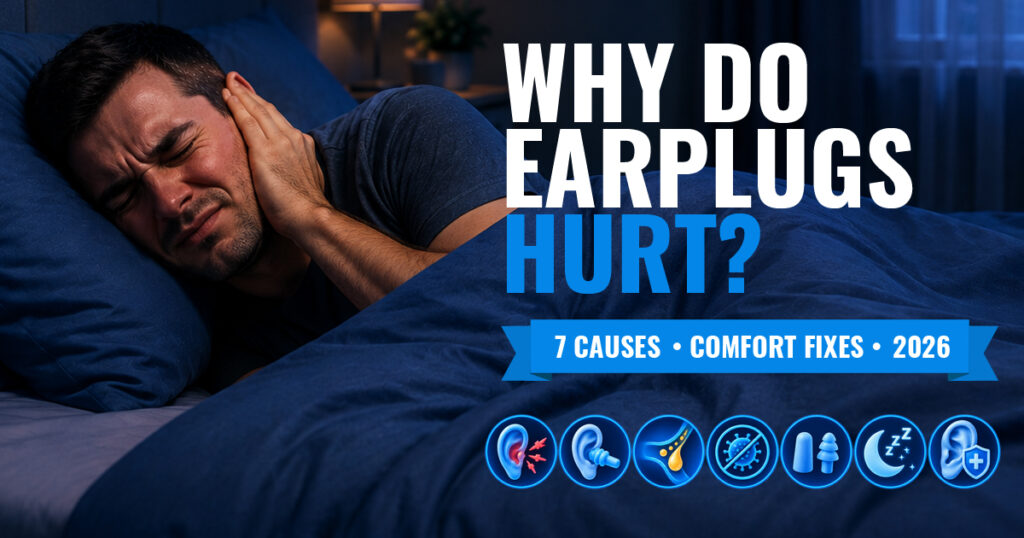
Why do earplugs hurt my ears? The most common reasons are an incorrect size, inserting them too deeply, pressure from your pillow, trapped moisture, skin irritation, earwax buildup or an existing ear-canal problem. Earplugs should reduce noise without causing persistent pain, burning or pressure. If they hurt, remove them and identify the cause before using them again.
Occasional mild awareness of a new earplug is different from pain. Sharp pain, increasing soreness, discharge, swelling or a noticeable change in hearing should not be ignored. This guide explains practical adjustments you can make and the symptoms that require professional medical advice.
Many sleepers ask, “Why do earplugs hurt my ears?” The answer often starts with size, insertion depth, material and sleeping position.
Quick answer:
- Try a smaller or lower-profile earplug.
- Do not push an earplug forcefully or unusually deep.
- Insert foam plugs with clean hands using the roll-pull-hold method.
- Replace dirty, damaged or permanently compressed plugs.
- Keep reusable plugs clean and completely dry.
- Stop using them if you develop pain, itching, discharge or reduced hearing.
Why Do Earplugs Hurt My Ears? 7 Common Causes
1. The Earplug Is Too Large
An earplug that is too large can place constant outward pressure on the ear canal. This is especially common with dense foam plugs and reusable silicone models with wide tips.
The plug may appear to fit initially but begin hurting after it expands or after you have worn it for an hour. You might notice pressure, throbbing or tenderness when removing it.
Effective fix: Try a smaller size or a softer product designed for small or sensitive ear canals. Do not assume that the largest plug gives the best real-world protection. A correctly fitted smaller plug may seal better and remain comfortable longer.
2. You Are Inserting the Earplug Too Deeply
Pushing an earplug forcefully into the canal can irritate its sensitive skin. Reusable plugs should form a comfortable seal, but they should never be driven inward until they cause pain.
With foam earplugs, the correct method is to roll the plug into a narrow cylinder, gently pull the ear upward and backward, insert the compressed plug and hold it while it expands. The CDC/NIOSH earplug fitting guide describes this as the roll-pull-hold method.
Effective fix: Remove the plug and try again using less force. If a reusable plug has a stem or grip, leave enough exposed to remove it easily according to the manufacturer’s directions.
3. Your Pillow Is Pressing the Earplug Inward
Side sleepers can experience pain even when an earplug feels comfortable while sitting upright. The pillow presses the outer ear against the plug, increasing pressure inside the canal.
This often explains why earplugs hurt only on one side or why the discomfort begins after you roll over during the night.
Still asking “Why do earplugs hurt my ears?” Compare how different designs sit inside the ear canal and against the pillow.
Effective fix: Choose a low-profile sleep earplug with minimal material protruding outside the ear. A pillow with a softer surface or an ear cutout may also reduce pressure.
For a detailed comparison of two low-profile reusable options, read our Loop Dream vs Loop Quiet 2 comparison.
4. Dirt, Moisture or Poor Ventilation Is Irritating the Canal
Earplugs reduce ventilation inside the ear canal. Reusing a dirty or damp pair can also expose the skin to moisture and debris. These conditions may contribute to irritation and can increase the risk of outer-ear inflammation.
NHS guidance identifies earplug use, water, skin trauma and wax buildup among possible contributors to otitis externa, an inflammation or infection of the outer ear canal.
Effective fix: Follow the manufacturer’s cleaning and replacement instructions. Wash reusable earplugs only when the product is designed to be washed, and allow them to dry completely before reuse. Disposable foam plugs should be replaced when dirty, damaged or no longer expanding properly.
5. The Material Is Irritating Your Skin
Some people are sensitive to a particular foam, silicone or surface coating. Existing eczema, psoriasis or damaged skin can make the canal more vulnerable to irritation.
Possible signs include itching, burning, redness or flaky skin around the canal entrance. Continuing to wear the same material may make the symptoms worse.
Effective fix: Stop using the product until the irritation settles. Consider a different material only after the skin is comfortable again. If symptoms persist or return with different products, ask a healthcare professional to examine your ears.
6. Earwax Is Being Pushed Deeper
Earwax normally moves gradually toward the outside of the canal. Repeated earplug use may interfere with this process or push wax farther inward. Impacted wax can cause fullness, discomfort, tinnitus or reduced hearing.
NHS earwax guidance notes that earplugs and objects placed in the canal may push wax further inside and prevent its natural removal.
Effective fix: Do not try to dig wax out with cotton swabs, hairpins or similar objects. These can push wax deeper and damage the canal. A pharmacist or healthcare professional can advise you about safe wax management based on your symptoms and medical history.
Do not use ear drops without professional advice if you may have a perforated eardrum, previous ear surgery or another known eardrum problem.
7. You Already Have an Ear Infection or Injury
An inflamed or infected ear canal may hurt whenever anything touches it. Warning symptoms can include increasing pain, itching, discharge, swelling, flaky skin or reduced hearing.
If earplugs suddenly become painful after previously feeling comfortable, an underlying ear problem is more likely than a simple sizing issue.
Effective fix: Stop placing earplugs in the affected ear and seek medical advice. Do not simply switch to a smaller plug and continue wearing it over painful or damaged skin.
The question “Why do earplugs hurt my ears?” becomes more important when discomfort continues after changing size or insertion technique.
How to Insert Foam Earplugs Without Pain
If you are asking why do earplugs hurt my ears while using foam plugs, technique should be one of the first things you check.
- Wash and dry your hands. Avoid transferring dirt or moisture to the earplug.
- Roll the plug. Compress the entire foam plug into a smooth, narrow cylinder without folding it.
- Pull the ear gently. Reach over your head with the opposite hand and pull the top of the ear upward and backward.
- Insert gently. Place the compressed plug far enough to create a seal, but stop immediately if you feel pain.
- Hold it in place. Hold the plug for approximately 20 to 30 seconds while the foam expands.
- Check the fit. Your voice may sound slightly different and surrounding noise should be reduced. The plug should not throb or feel sharply painful.
- Remove it slowly. Gently twist the plug while pulling it outward rather than removing it abruptly.
Important: A tight seal is useful, but pain is not evidence of a better seal. If the plug becomes painful as the foam expands, remove it and try a smaller or softer option.
Which Type of Earplug Is Most Comfortable for Sleeping?
| Earplug type | Possible advantage | Possible drawback |
|---|---|---|
| Soft foam | High noise reduction and low initial cost | May create expansion pressure or feel large |
| Low-profile reusable | Less material protruding into the pillow | The fixed shape may not suit every ear |
| Flanged silicone | Reusable and easy to grip | Flanges may irritate sensitive canals |
| Moldable putty | Sits over the canal opening instead of deep inside it | Must be used exactly as the manufacturer instructs |
No single material works for every person. Comfort depends on ear-canal size, sleeping position, insertion depth and how long the plugs are worn.
For product options designed around sleep and nighttime noise, see our guide to the best earplugs for snoring partners. If unpredictable sound makes you feel tense at night, our earplugs for anxiety guide discusses comfort-focused options.
Can You Wear Earplugs Every Night?
Many adults can use correctly fitted, clean earplugs regularly without developing problems. However, nightly use requires attention to comfort, hygiene, skin condition and changes in hearing.
Remove the plugs and reassess your routine if you develop recurring pain, itching, blocked hearing or excess wax. Our guide, Is It Safe to Sleep With Earplugs Every Night?, explains these precautions in more detail.
It can also help to alternate earplugs with an external sound-masking option. Our white noise vs earplugs comparison explains when each method may be more suitable.
When Should You Stop Using Earplugs?
Stop wearing earplugs and arrange professional medical advice if you experience:
- Persistent or worsening ear pain
- Fluid, pus or blood coming from the ear
- Swelling or redness around the ear
- A sudden or unexplained change in hearing
- Severe itching or damaged skin inside the canal
- Dizziness, significant balance problems or vomiting
- Fever or feeling generally unwell with ear symptoms
- A plug or part of a plug becoming stuck
Seek prompt advice if symptoms are severe or if you have diabetes, a weakened immune system, a known eardrum problem or previous ear surgery.
Medical note: This article provides general educational information and cannot diagnose ear pain. Persistent pain, discharge or hearing changes require assessment by a qualified healthcare professional.
Frequently Asked Questions
Why do foam earplugs hurt after a few hours?
Foam expands after insertion. A plug that is too large or dense may create increasing pressure as it expands. Pillow pressure can make this worse for side sleepers. Try a smaller or softer plug and review your insertion technique.
Should earplugs feel tight?
They should feel secure enough to create a seal but should not cause sharp pain, throbbing or burning. Pain means you should remove the plug and investigate the fit, size, material or condition of the ear.
Why does only one ear hurt when I wear earplugs?
Your ear canals may be different sizes, or you may sleep with more pressure on one side. Wax buildup, irritated skin or an infection can also affect only one ear. Persistent one-sided symptoms should be professionally examined.
Can earplugs cause an ear infection?
Earplug use does not automatically cause infection, but dirty plugs, trapped moisture, damaged skin and reduced ventilation may contribute to conditions in which irritation or infection develops.
Can I clean my ears with cotton swabs before wearing earplugs?
No. Cotton swabs can push wax deeper and irritate the ear canal. Clean only the outside of the ear unless a healthcare professional gives you different instructions.
Conclusion
Why do earplugs hurt my ears? In most cases, discomfort begins with the wrong size, excessive insertion depth, expansion pressure or pillow contact. Switching to a smaller, softer or lower-profile design and improving your insertion technique may solve the problem.
However, pain accompanied by itching, discharge, swelling or hearing changes should not be treated as an ordinary fit problem. Stop wearing the plugs and obtain appropriate medical advice before putting anything else in the affected ear.