Disclosure: This article links to product guides that may contain affiliate links. If you buy through one of those links, Beglance may earn a commission at no extra cost to you.
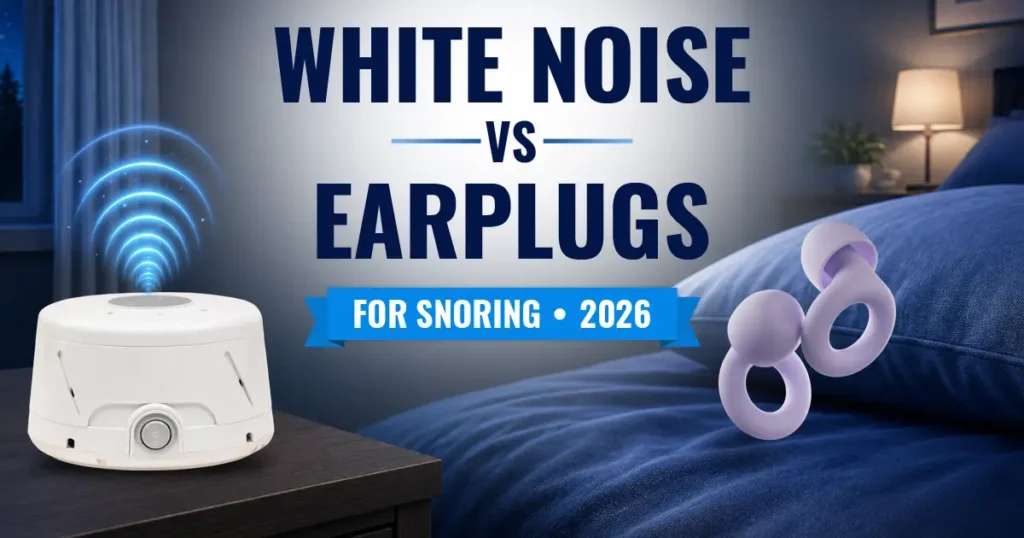
White noise vs earplugs for snoring: choose earplugs when you want to reduce the sound reaching your ears, and choose white noise when you want to make changes in the sound less noticeable without wearing anything. For loud, nearby snoring, correctly fitted earplugs usually provide the stronger first step. For people who dislike pressure in their ears or need to remain more aware of alarms and household sounds, low-volume white noise may be easier to use.
Some sleepers get the best result by combining comfortable earplugs with gentle background sound. Neither option treats the cause of snoring, however. If the snoring includes gasping, choking, breathing pauses or serious daytime sleepiness, it should be discussed with a healthcare professional rather than simply covered with more sound.
Quick verdict
- Best for stronger sound reduction: correctly fitted earplugs
- Best for no in-ear pressure: white noise at the lowest effective volume
- Best for sudden changes in snoring: white noise or fan sound
- Best for loud snoring beside you: earplugs, or earplugs plus gentle white noise
- Best when alarms or monitoring matter: use caution with either option and confirm that essential alerts remain audible
White Noise vs Earplugs for Snoring: Quick Comparison
| Factor | White Noise | Earplugs |
|---|---|---|
| How it works | Adds a steady sound that makes changes less noticeable | Reduces the sound entering the ear canal |
| Best for | Variable snoring, hallway noise and people who dislike ear pressure | Loud, nearby snoring and travel |
| Main comfort issue | The added sound may feel distracting or too bright | Pressure, fit and side-sleeper discomfort |
| Alarm awareness | Usually adjustable, but high volume can still mask alerts | May reduce alarms, voices and other important sounds |
| Ongoing care | Keep the device clean and the volume moderate | Use clean hands; replace foam plugs or clean reusable plugs as directed |
| Typical cost pattern | One device, electricity or battery use | Low initial cost, but disposable plugs require replacement |
The white noise vs earplugs for snoring decision comes down to whether you need stronger physical attenuation or a more comfortable way to smooth sudden changes in bedroom sound.
How White Noise Handles Snoring
White noise does not remove snoring from the room. It creates a steady acoustic background so that each rise and fall in the snoring stands out less sharply. That distinction matters: the goal is sound masking, not sound blocking.
In the white noise vs earplugs for snoring comparison, this makes white noise the less isolating option, but not necessarily the stronger one.
This can work well when the main problem is unpredictability. A quiet room followed by a sudden snore creates a noticeable change. A steady fan or sound machine narrows that contrast, which may make the disturbance easier to ignore.
The research should be described honestly. A systematic review of continuous noise as a sleep aid found mixed results and rated the overall evidence for sleep improvement as very low quality. That does not prove white noise is useless; it means individual response matters and broad promises are not supported by strong evidence.
Advantages of white noise
- Nothing has to be inserted into the ear.
- One machine can create a more consistent sound environment for the entire room.
- The volume and sound profile can be adjusted gradually.
- It can also soften changes from traffic, doors, footsteps and neighbors.
- It is easy to stop using if the sound becomes irritating.
Limitations of white noise
- It adds sound instead of reducing the snoring at your ear.
- It may be insufficient when the snoring is loud and only a few inches away.
- Higher volume is not automatically more effective or safer.
- Some people find white noise harsh and prefer fan, pink or brown-noise settings.
- A poorly designed recording may contain obvious loops or volume changes.
If you prefer this approach, compare simple bedside options in our guide to the best white noise machines for a steadier sleep environment. The same features—consistent sound, simple controls and a useful volume range—also matter when masking snoring.
How Earplugs Reduce Snoring Noise
Earplugs work differently. Foam or reusable plugs form a barrier in the ear canal and reduce the level of sound that reaches the eardrum. They do not create silence, and their real-world performance depends heavily on fit.
For white noise vs earplugs for snoring, earplugs therefore have the advantage when direct sound reduction is the main goal.
The number printed on a package should not be treated as a guaranteed personal result. The U.S. National Institute for Occupational Safety and Health explains that a labeled Noise Reduction Rating may not match the protection an individual receives and that fit is critical. Its guidance is written for workplace hearing protection, but the underlying lesson is relevant at bedtime: a high-rated plug inserted poorly may reduce less sound than a comfortable plug fitted correctly. See the NIOSH hearing-protection guidance for more detail.
Advantages of earplugs
- They reduce sound without adding another sound to the bedroom.
- They are compact, inexpensive and easy to pack for travel.
- Foam options can provide substantial attenuation when fitted correctly.
- Low-profile reusable designs may be comfortable for some side sleepers.
- They do not require power, an app or a bedside surface.
Limitations of earplugs
- Fit varies because ear canals and comfort preferences vary.
- Side sleeping can push some reusable designs against the ear.
- Improperly inserted foam plugs may provide disappointing reduction.
- They may make alarms, children, smoke alarms or other essential sounds harder to hear.
- Dirty or worn plugs can become uncomfortable and should not be reused beyond the manufacturer’s instructions.
For sleep-focused choices, see our comparison of the best earplugs for snoring partners. If you are comparing two reusable Loop models specifically, our Loop Dream vs Loop Quiet 2 guide explains the differences in fit, published reduction and value.
White Noise vs Earplugs for Snoring: Which Works for Loud Snoring?
For loud snoring from a partner beside you, earplugs are normally the stronger first experiment because they reduce the sound before it reaches your ear. White noise may make the rhythm less noticeable, but turning a machine louder and louder is not a good substitute for attenuation.
If comfortable plugs reduce the snoring but do not smooth out every peak, add white noise at a low level. The combination attacks the problem in two ways: the plugs lower the incoming sound, while the steady background makes the remaining changes less obvious.
Keep expectations realistic. No consumer earplug guarantees silence, and no sound machine can erase a loud snore produced close to your head.
White Noise vs Earplugs for Snoring for Side Sleepers
The winner depends on ear comfort. White noise avoids direct pressure and may be the easiest choice if every plug becomes painful against the pillow. If you need stronger reduction, look for a low-profile sleep plug that does not protrude far from the outer ear.
Do not accept persistent pain as the price of quiet. Try a different size, material or shape. Stop using the plug if it causes pain, discharge, worsening irritation or a blocked sensation that does not resolve, and seek professional advice when symptoms persist.
White Noise vs Earplugs for Snoring When Alarms Matter
Both tools can reduce awareness when used too aggressively. Earplugs attenuate alarms along with snoring. White noise can mask alerts when the machine is loud or placed close to the pillow.
If you must hear a smoke alarm, baby monitor, medical alert or another person, test your setup while awake. Use the lowest effective white-noise level and confirm that essential alarms remain detectable from your sleeping position. Consider a compatible vibrating or visual alarm as an additional alert, not as an excuse to use excessive masking volume.
Is It Safe to Use White Noise All Night?
There is no reason to make a sound machine louder than necessary. Place it away from your head, begin at a low setting and increase only until sudden changes are less distracting. A timer is useful if you mainly need help falling asleep, while continuous use may suit rooms where disturbances continue through the night.
NIOSH identifies repeated occupational exposure at or above 85 dBA over eight hours as hazardous, but that workplace limit is not a recommended target for a bedroom. Your sleep sound should be far below a level that feels loud, forces raised voices or leaves your ears ringing. If the machine causes discomfort, headaches, ringing or muffled hearing, stop and reassess the volume and placement.
How to Use Earplugs More Effectively
- Start with clean, dry hands. Foam plugs have to be rolled before insertion, so hand hygiene matters.
- Follow the manufacturer’s insertion directions. Different shapes use different techniques.
- Test both comfort and reduction before bedtime. A plug that hurts after ten minutes is unlikely to work for eight hours.
- Try more than one size. Larger is not always better, and left and right ears may fit differently.
- Replace disposable foam plugs regularly. Do not keep using plugs that are dirty, damaged or no longer expand properly.
- Clean reusable plugs as directed. Allow them to dry fully before storage.
- Confirm that important alerts remain audible. Test alarms from the bed while awake.
Can You Use White Noise and Earplugs Together?
Yes. For many people, the most practical answer to white noise vs earplugs for snoring is a carefully balanced combination. Insert comfortable plugs correctly, then use a low background level—only enough to smooth the snoring that remains.
Do not maximize both tools. The goal is better sleep with the least intervention necessary. You should still be able to detect required alarms and respond to emergencies.
Simple three-night test
- Night 1: try white noise alone at the lowest useful setting.
- Night 2: try correctly fitted earplugs alone.
- Night 3: combine the more comfortable plugs with low white noise.
Record awakenings, comfort, alarm awareness and how rested you feel. Choose the lightest setup that gives a meaningful improvement.
What If the Snoring May Be a Health Warning?
Sound control can protect the listener’s sleep, but it must not hide a possible medical problem. The National Heart, Lung, and Blood Institute lists breathing that starts and stops, frequent loud snoring and gasping for air among possible sleep-apnea symptoms. Daytime sleepiness and tiredness can also occur.
Do not simply mask these warning signs: repeated breathing pauses, gasping, choking, frequent loud snoring or serious daytime sleepiness. Encourage the person who snores to discuss the pattern with a healthcare professional. Read the NHLBI sleep-apnea symptom guide.
For a broader plan that includes sleep position, bedroom changes and how to discuss the problem calmly, read how to sleep with a snoring partner.
Final Verdict
In the white noise vs earplugs for snoring comparison, earplugs are better for reducing loud nearby snoring, while white noise is better for people who want to soften unpredictable sound without putting anything in their ears.
Start with the option you can use comfortably and consistently. If one method helps but does not go far enough, combine comfortable earplugs with low-volume background sound. Keep essential alarms audible, avoid excessive volume and remember that neither method treats the person who snores.
Frequently Asked Questions
Do earplugs completely block snoring?
No. Earplugs reduce sound rather than creating complete silence. The result depends on the plug, your ear-canal shape and how well it is fitted.
Does white noise cover loud snoring?
It can make changes in snoring less noticeable, but it may not adequately mask very loud snoring from a nearby partner. Earplugs or a combination often works better in that situation.
Can I use white noise and earplugs together?
Yes. Use comfortable, correctly fitted plugs and add white noise only at the lowest level needed to smooth the remaining sound. Confirm that essential alarms are still audible.
Is white noise safe to play all night?
Use the lowest effective volume, keep the machine away from your head and stop if it causes discomfort, ringing or muffled hearing. A timer is an option when you mainly need help falling asleep.
When should snoring be medically evaluated?
Seek professional guidance when loud snoring is accompanied by breathing pauses, gasping, choking, serious daytime sleepiness or other concerning symptoms. These can be signs of sleep apnea.
This article is for general educational purposes and is not medical advice. A qualified healthcare professional can assess persistent sleep, breathing, ear or hearing concerns.