
If you’re searching for how to stop anxiety at night, the goal isn’t to “think your way” into sleep.
The fastest improvement usually comes from reducing stimulation and using a short routine that tells your nervous system: you’re safe now.
If you’re wondering how to stop anxiety at night, start by lowering stimulation first (light, sound, and mental loops) rather than trying to force sleep.
Quick Answer
To stop anxiety at night, use a 10-minute reset: slow exhale breathing, a quick brain dump to stop the thought loop, then one tool that matches your trigger (light, noise, or body restlessness).
Consistency matters more than perfection—repeat the same routine for 7 nights before judging results.
Why Anxiety Feels Worse at Night
Nighttime anxiety feels intense for a few common reasons. When the day gets quiet, your brain has fewer distractions—so thoughts, sensations, and small environmental triggers feel louder.
That doesn’t mean you’re “broken.” It often means your nervous system is still in a heightened state and needs a clearer off‑ramp.
- Fewer distractions: worries feel bigger in silence.
- Body awareness increases: heartbeat, tension, and restlessness become more noticeable.
- Environmental triggers: light and random sounds can keep the brain alert.
- Unfinished tasks: your brain tries to plan tomorrow at 1 AM.
For a trusted overview of anxiety, you can also read this resource from
MedlinePlus (Anxiety)
.
How to Stop Anxiety at Night: The 10-Minute Routine
This routine is designed to be simple. You do not need perfect breathing, perfect mindfulness, or a “perfect mindset.”
You only need to reduce stimulation and repeat the same sequence enough times that your brain learns the pattern.
Step-by-step (fast checklist)
| Time | What to do | Why it helps |
|---|---|---|
| Minute 1–2 | Slow exhale breathing (4 seconds in, 6 seconds out) | Longer exhales help calm the body’s alert response |
| Minute 3–5 | 3-line brain dump | Stops the “mental loop” from trying to solve everything now |
| Minute 6–8 | Lower stimulation (dim light + phone away) | Reduces cues that keep your brain activated |
| Minute 9–10 | Use ONE tool based on your trigger (light/noise/body) | Solves the correct problem without overwhelm |
Minute 1–2: Slow Exhale Breathing
Do 6–8 rounds of this:
- Inhale through the nose for 4 seconds
- Exhale slowly for 6 seconds
Keep it gentle. You are not trying to “win” breathing—you’re giving your body a calm rhythm to follow.
Minute 3–5: Brain Dump to Stop the Thought Loop
Write these 3 lines (on paper or notes app—paper is better if possible):
- What I’m worried about is…
- What I can do tomorrow is…
- Right now I only need to rest.
This works because it creates closure. Your brain often loops because it thinks the problem will be forgotten.
You’re telling it: “It’s captured. We can sleep.”
Minute 6–8: Reduce Stimulation
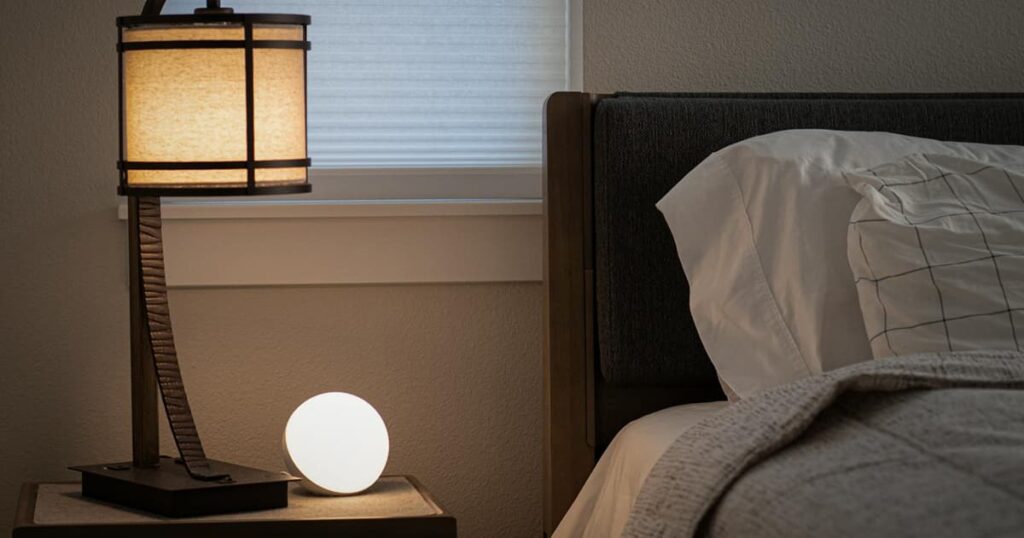
- Dim your lights (warm light is better than bright white light)
- Put your phone away (out of reach if possible)
- Lower the room temperature slightly if you can (comfort first)
If you wake up and check your phone, your brain gets a “daytime cue” that can restart alert mode.
Even 10 minutes without screens can make a difference.
Minute 9–10: Add ONE Tool Based on Your Trigger
Pick one. Not three. Too many changes can feel like work—and anxiety hates “work” at night.
Use the tool that matches your real trigger:
If Your Trigger Is Light
Light sensitivity is a common and underrated trigger. If any light keeps your brain alert, start with light control.
Read:
best sleep masks for anxiety.
If Your Trigger Is Noise
If random sounds keep pulling you into alert mode, steady background sound often helps more than silence.
Read:
best white noise machines for anxiety.
If Your Trigger Is Body Restlessness
If your body feels “wired,” pressure-based comfort can help you settle physically. Use our
weighted blanket weight guide
to pick a safe, comfortable weight without guessing.
Common Mistakes That Make Night Anxiety Worse
- Trying to solve everything in bed: capture it in a brain dump and delay decisions until morning.
- Switching tools every night: test one routine for 7 nights before changing.
- Over-scrolling for comfort: it often adds stimulation and delays sleep.
- Making the routine too long: short and repeatable beats perfect and complicated.
Want a Full System Instead of Guessing?
If you want a complete setup (light + sound + body comfort + a simple structure), start here:
sleep routine kit for anxiety.
Frequently Asked Questions
Why does anxiety spike when I try to sleep?
At night your brain has fewer distractions, so it notices thoughts, sensations, and environmental triggers more intensely. A predictable routine helps reduce that alert response.
What if my anxiety comes back after I calm down?
That’s normal. Repeat the same breathing + brain dump, then return to your tool. Consistency is what trains your brain to stop escalating.
Should I use multiple tools at once?
Start with one. Add a second only if it solves a different problem (for example, light + noise). Too many tools can feel overwhelming.
How many nights should I test this routine?
Try it consistently for about 7 nights. Small changes can feel subtle day-to-day, but patterns show up over a week.
Related guides on Beglance
- Sleep Routine Kit for Anxiety (Checklist + 7-Day Plan)
- Best Sleep Masks for Anxiety (Side Sleepers Guide)
- Best White Noise Machines for Anxiety (Beginner Guide)
- Weighted Blanket Weight Guide (Beginner-Friendly)
Final Thoughts
If you want to know how to stop anxiety at night, keep it simple: reduce stimulation, repeat the same 10-minute routine, and use one tool that matches your trigger.
Over time, your brain learns the pattern—and nights get easier.
The most reliable way to learn how to stop anxiety at night is to repeat the same 10-minute routine consistently for a week and adjust only one trigger at a time.


Pingback: Sleep Routine Kit for Anxiety: 4 Powerful Tools That Actually Work
Pingback: Best Sleep Masks for Anxiety (Side Sleepers Guide 2026)
Pingback: Best White Noise Machines for Anxiety (Beginner Guide 2026)