
This post contains affiliate links. As an Amazon Associate, I earn from qualifying purchases at no extra cost to you.
If your mind gets noisy at night, you’re not “lazy” or “broken.” Night anxiety is often your brain reacting to triggers like
light, noise, body tension, and overthinking loops.
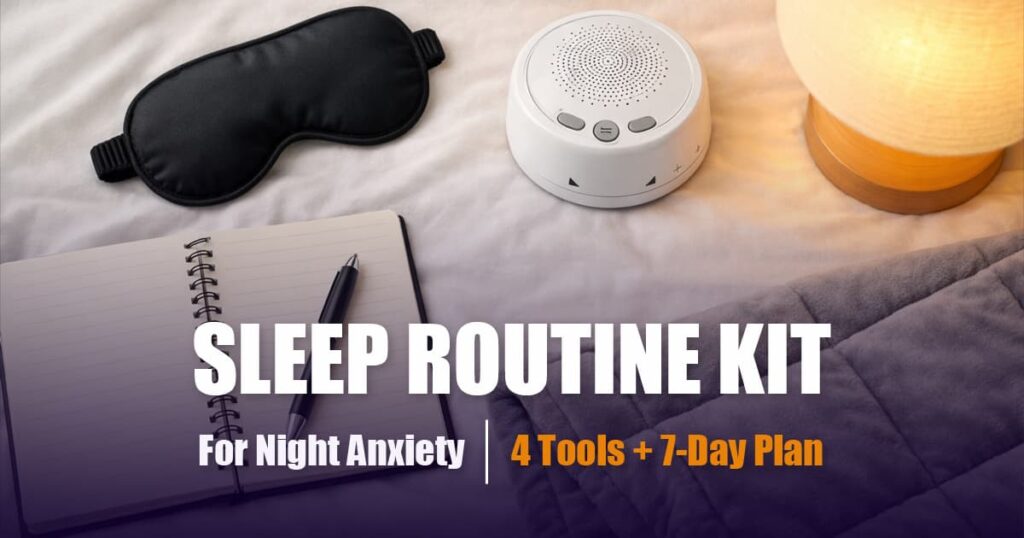
That’s why a simple sleep routine kit for anxiety can help: it removes triggers and adds calming cues so sleep feels easier.
In this guide, you’ll get a beginner-friendly kit checklist, how to choose tools based on your exact sleep problem,
and safe tips you can try for 7 days without overcomplicating it.
What Is a Sleep Routine Kit for Anxiety?
A sleep routine kit for anxiety is a small set of tools designed to reduce nighttime overstimulation.
It typically includes light control, sound management, body-comfort tools, and a short mental reset method.
Night anxiety often increases alertness and makes it harder to fall asleep.
According to the
Sleep Foundation
,
anxiety can significantly impact sleep quality and increase nighttime wakefulness.
Quick Answer
A sleep routine kit for anxiety is a small set of tools that reduce bedtime “alert signals.”
Start with one tool for light + one tool for sound + one tool for body comfort or overthinking.
Use the same 2–3 tools for 7 nights before changing anything.
If your anxiety spikes right at bedtime, follow this 10-minute routine to stop anxiety at night before using the tools below.
What’s inside a Sleep Routine Kit for Anxiety?
Think of your kit like a “sleep environment + nervous system support” bundle. You don’t need everything.
You just need the few items that match your biggest sleep blocker.
- Light control: sleep mask or blackout curtains
- Sound control: earplugs or white noise machine
- Body calm: weighted lap pad/blanket or gentle warmth (optional)
- Overthinking control: a simple notebook (brain dump method)
Step 1: Find your #1 sleep blocker (choose one)
Pick the one that matches you most:
- Light wakes me up → start with a sleep mask
- Noise wakes me up → start with earplugs or white noise
- My body feels restless → start with gentle pressure (lap pad) or comfort cues
- My mind won’t stop → start with the 3-minute brain dump
Step 2: Build your kit (the “2 + 1” rule)
To avoid wasting money, use the 2 + 1 rule:
- Choose 2 environment tools (light + sound)
- Choose 1 nervous-system tool (comfort or brain dump)
That’s enough for most beginners. You can always upgrade later.
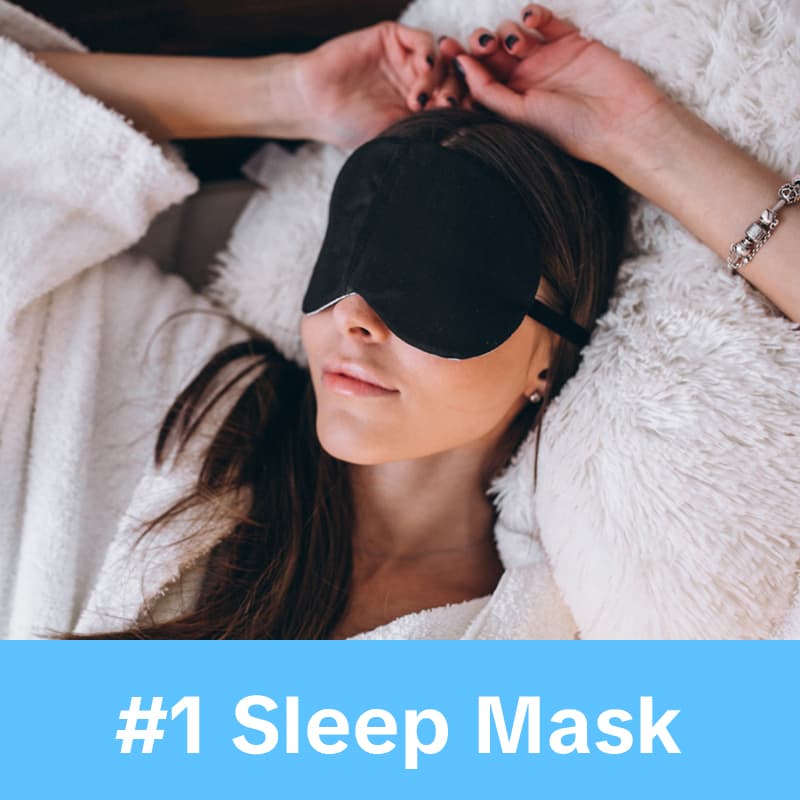
Tool #1: Sleep Mask (Light Control)
Light is a powerful “wake” signal. Even small brightness (phone glow, street lights, hallway lights) can keep your brain on alert.
A sleep mask is the fastest way to test if light is your issue—without changing your whole room.
What to look for:
- Soft, breathable fabric (comfort matters more than “premium”)
- Adjustable strap (so it stays on without squeezing)
- Contoured style if you dislike pressure on eyelids (especially for side sleepers)
Disclosure: We may earn a commission if you purchase through our links.
Check comfortable sleep masks on Amazon →
Tool #2: Earplugs OR White Noise (Sound Control)
If you get startled by small sounds, your brain is doing “threat scanning.”
Sound control gives your nervous system fewer reasons to stay alert.
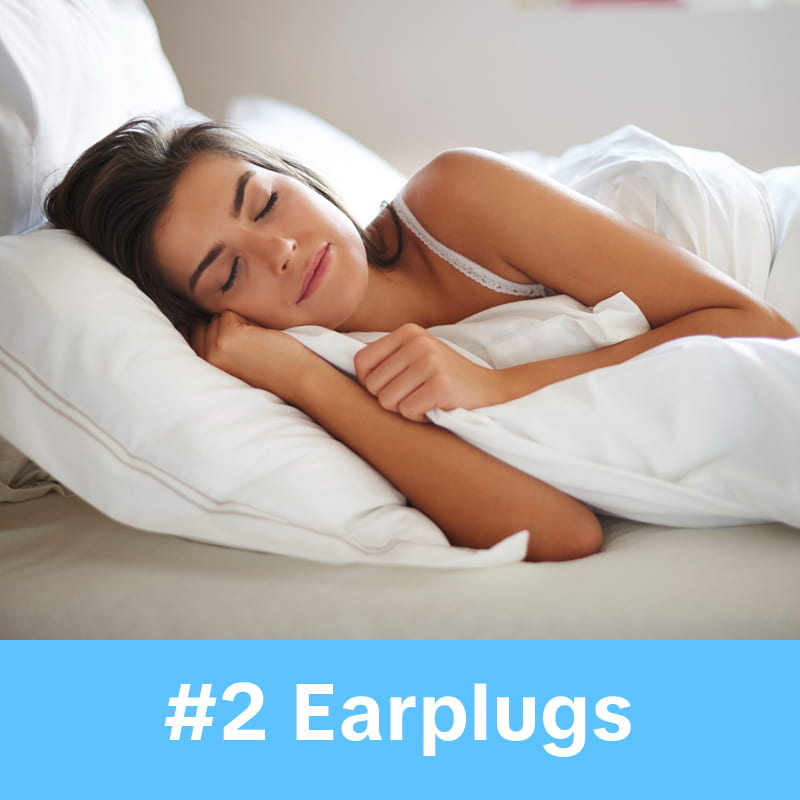
Option A: Earplugs
- Best for: loud neighbors, traffic, snoring nearby
- Look for: comfort fit, not painful, and easy to insert/remove
Browse sleep-friendly earplugs →
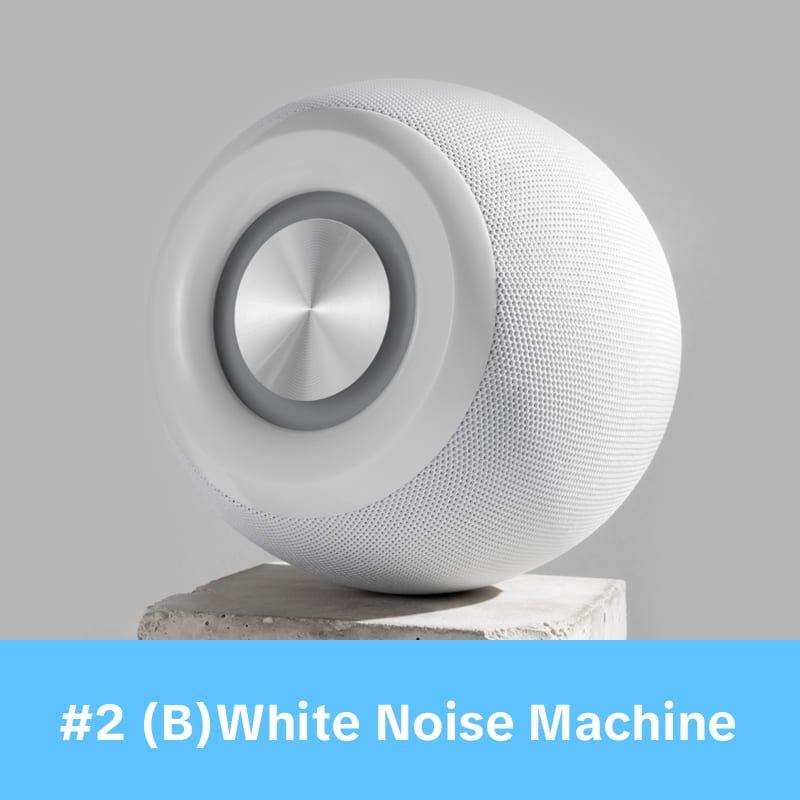
Option B: White Noise Machine
- Best for: apartment noise, sudden sounds, hallway noise
- Look for: timer, steady sound options, and simple buttons
If sound is one of your biggest nighttime triggers, read our full guide to best white noise machines for anxiety to compare beginner-friendly options in more detail.
See white noise machines with timer →
If you prefer blocking noise instead of masking it, see our guide to the best earplugs for anxiety for comfort-first picks you can actually sleep in.
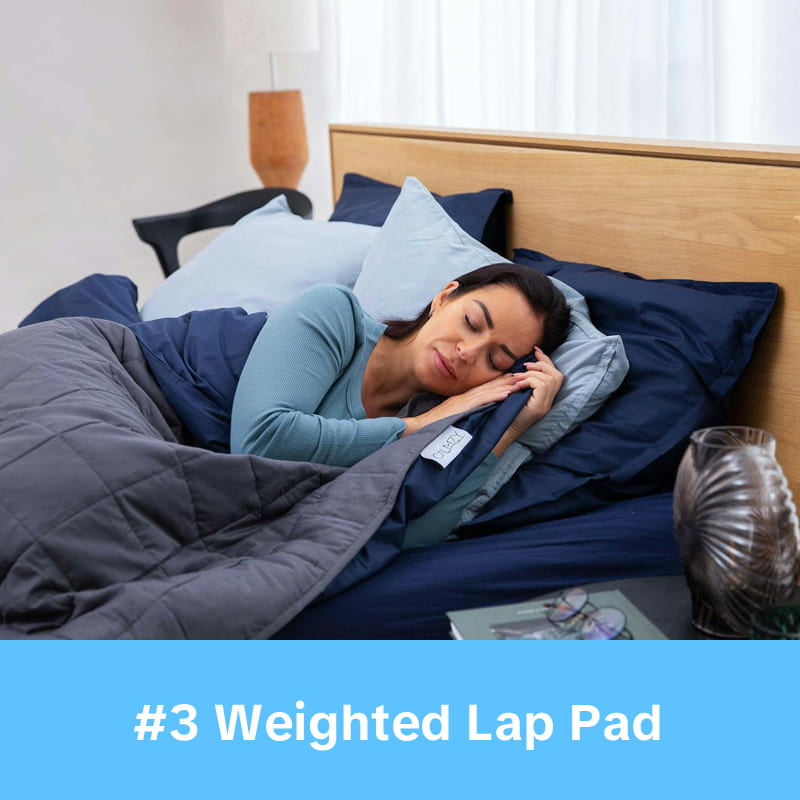
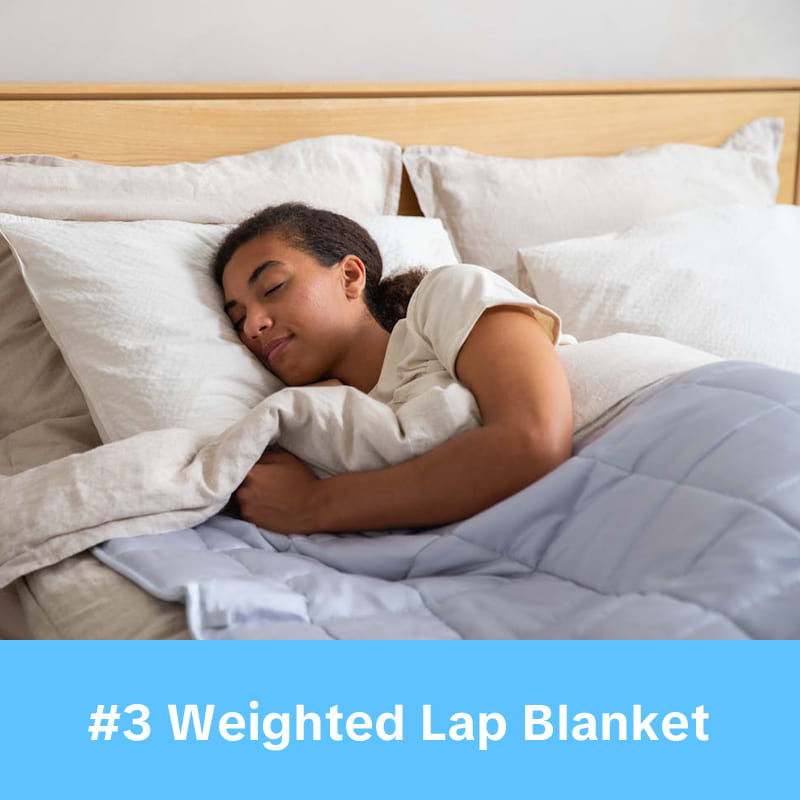
Tool #3: Weighted Lap Pad or Blanket (Body Calm)
Some people feel calmer with gentle pressure because it can feel grounding and cozy.
If you sleep hot or feel trapped easily, start with a weighted lap pad (lighter + easier to remove) instead of a full blanket.
What to look for:
- Breathable fabric
- Easy cleaning
- A weight that feels comforting—not overwhelming
If physical restlessness is part of your night anxiety, the simplest “body-calming” upgrade is choosing the right weighted blanket weight. Follow our weighted blanket weight guide for an easy beginner chart.
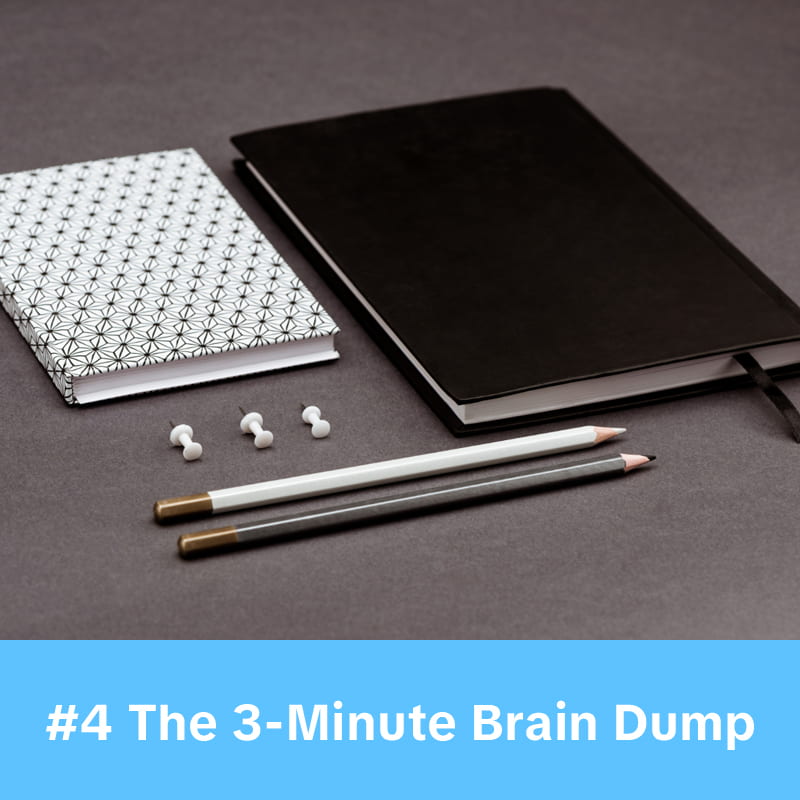
Tool #4: The 3-Minute Brain Dump (Overthinking Reset)
If you lie down and your brain starts replaying everything, your goal is not to “force calm.”
Your goal is to move thoughts out of your head so your brain stops treating them like urgent tasks.
The 3-minute method
- Worry list: write what you’re worried about (short bullet points)
- Tomorrow plan: write 1–3 tiny actions for tomorrow (smallest possible)
- Close the loop: write one sentence: “I don’t need to solve this tonight.”
Get a simple notebook that opens flat →
Quick Comparison: Which Tool Fits Your Night Anxiety?
| Tool | Best For | Low Effort? | Side Sleeper Friendly? |
|---|---|---|---|
| Sleep Mask | Light sensitivity | Yes | Yes (contoured) |
| White Noise | Sudden sound triggers | Yes | Yes |
| Weighted Lap Pad | Restless body tension | Moderate | Yes |
| 3-Minute Brain Dump | Overthinking | Very Easy | Yes |
A 7-Day Trial Plan (So You Don’t Quit Too Early)
Most people change routines too quickly. Instead, use this 7-day test.
You only change one thing every 2 days.
- Nights 1–2: Use your light tool (sleep mask) + keep everything else the same
- Nights 3–4: Add your sound tool (earplugs or white noise)
- Nights 5–7: Add your body calm tool OR the 3-minute brain dump
Track one result: “How long did it take me to feel sleepy?” (rough guess is fine)
Common mistakes that make the kit fail
- Buying too much: more items = more decision stress
- Uncomfortable tools: if it annoys you, you won’t use it
- Changing every night: you won’t know what works
- Using the bed for scrolling: your brain learns “bed = alerts”
Helpful external resource
If you want a deeper educational guide about the anxiety–sleep connection, this is a good reference:
Sleep Foundation: Anxiety and Sleep
Why Environment Changes Work Better Than Willpower
Many people try to “force” themselves to sleep by relaxing harder or thinking more positively. The problem is that anxiety is often triggered by environmental cues — light, sound, temperature, or unresolved tasks.
A sleep routine kit works because it removes stimulation instead of fighting it. When your bedroom becomes predictable, darker, and quieter, your nervous system receives fewer alert signals. Over time, your brain starts associating those tools with safety and rest, making it easier to fall asleep naturally.
FAQ
What is the best sleep routine kit for anxiety for beginners?
Start with sleep mask + earplugs (or white noise). Add either a weighted lap pad or the 3-minute brain dump.
Keep it to 2–3 tools so it stays easy.
How long does it take to see results?
Many people notice small improvements within a week if they stay consistent.
That’s why the 7-day plan matters more than buying “perfect” products.
Is this medical advice?
No. This guide is for general wellness and comfort. If anxiety is severe, getting worse, or affecting daily life,
consider talking with a qualified professional.
Should I use all the tools at once?
No. Start with one or two tools that match your main trigger (light, noise, or overthinking). Using too many changes at once makes it harder to know what actually works. Test consistently for 7 nights before adjusting.
Related guides on Beglance
Best Manifestation Journals for Clarity and Focus
Books for Personal Growth That Improve Mindset and Emotional Strength
Morning Habits and Productivity Tools for a Calmer Day
Important note
This content is for general wellness and educational purposes only. It does not replace medical advice.
If you have health conditions or concerns, consult a qualified professional before using pressure/heat tools.

Pingback: Best White Noise Machines for Anxiety (Beginner Guide 2026)
Pingback: Ultimate Weighted Blanket Weight Guide: Easy Chart (2026)
Pingback: How to Stop Anxiety at Night (10-Minute Routine That Works)